Europe Gets a Congress It Did Not Vote For and Cannot Count On
Kaja Kallas was the first EU leader to respond to the Democratic sweep, hoping the new Congress will keep funding Ukraine and press Russia harder. In Brussels the hope is real and the leverage is not: tariffs, aid and peace talks are all still in Washington's hands.
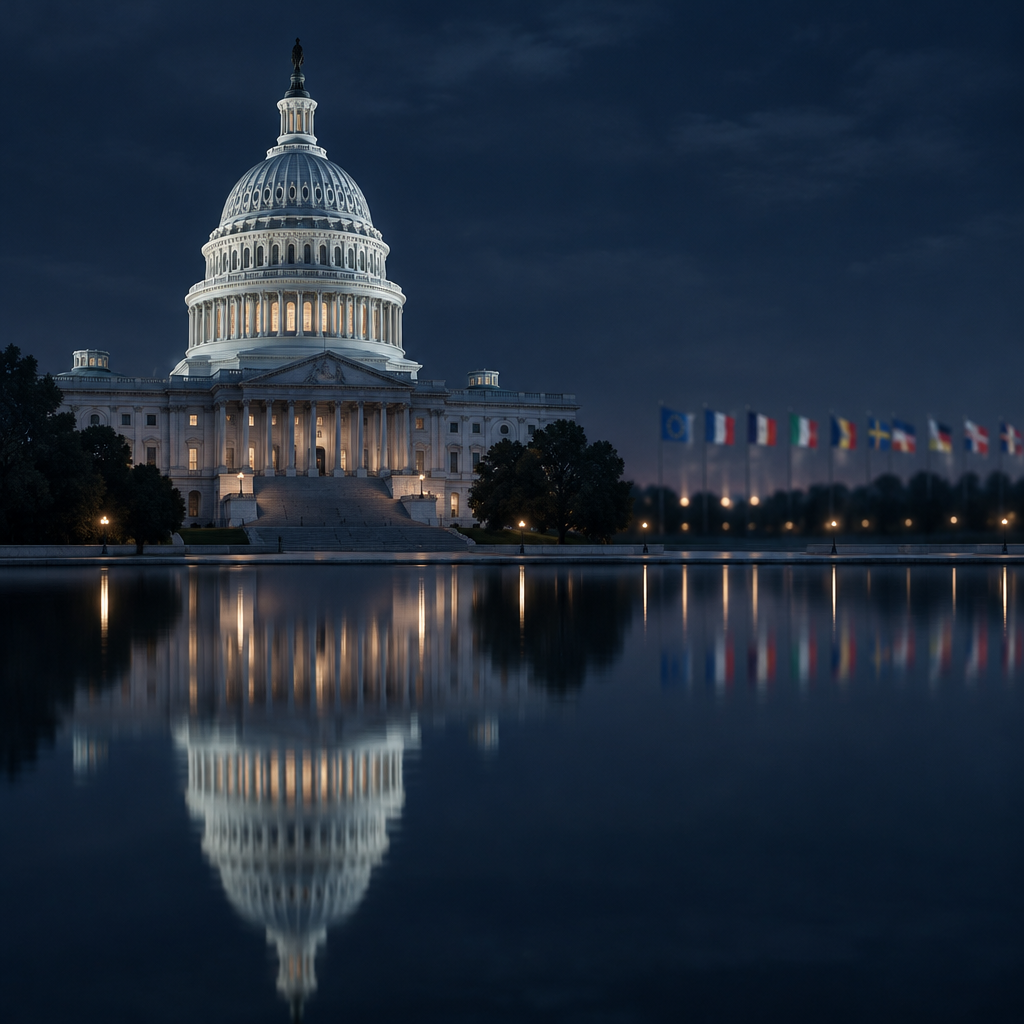
The Democratic Party won control of both the House and the Senate in the 3 November midterm elections, a result that drew a cautious and immediate response from Brussels. Kaja Kallas, the EU's High Representative for Foreign Affairs and Security Policy, was the first European leader to comment, speaking at a press conference presenting the enlargement progress reports.
"US voters have clearly expressed their choice," Kallas said. "I hope that the new Congress and the new Senate will continue to support Ukraine and exert greater pressure on Russia." She added that Europe and the United States are much stronger together, that the message needs to be conveyed clearly to Russia, and that the pressure needed to bring the war to an end should be maintained. "So let's see what happens now," she said.
The specific things Europeans asked for
Brando Benifei, the MEP who chairs the European Parliament's delegation for relations with the United States, set out a four-part agenda: a gradual return to zero-for-zero tariffs, strengthened support for Ukraine, a commitment to resolving the crisis in the Middle East, and strategic cooperation on critical minerals and semiconductors.
He described the shift of the congressional majority as an unequivocal political signal that the American people want to turn the page, and argued that the new Congress must resume the full exercise of its constitutional powers after years of encroachment by the executive, including in international law.
The Five Star Movement was more combative. MEP Pasquale Tridico called on the Commission to capitalise on the result to force the Trump administration to renegotiate what he called the nefarious tariff agreement signed in Scotland, and the party read the outcome as a template for European elections, including Italy's in 2027.
Carlo Fidanza, leader of the Fratelli d'Italia delegation, rejected the framing entirely, saying the left had failed to win a noteworthy election in Italy and was rushing to claim credit, and that for his party the transatlantic bond is independent of which administration holds office and which majority controls Congress.
Outside Brussels, most European leaders stayed quiet. Spain's Pedro Sánchez was the notable exception, calling the result a vote against hate.
Why the relief is overstated
The structural reality is that the instruments Europe cares about are not congressional.
Tariffs are imposed by the executive under existing statutory authority, and a new Congress does not automatically repeal them. Aid to Ukraine flows through programmes that a hostile Congress could block and a friendly one can facilitate, but the volume and the timing remain a presidential decision. The peace process being run through Witkoff and Kushner, with the Abu Dhabi round on 10 and 11 November, is an executive track in which Congress has no formal role.
What a Democratic Congress can do is refuse to fund things, subpoena officials, hold hearings and make the political cost of certain decisions higher. That is meaningful, and for Ukraine it is the difference between predictable support and unpredictable support. It is not the same as a policy change.
There is also the timing problem. A new Congress takes months to seat, organise and staff its committees. The 2027 budget cycle and the next tranche of Ukraine funding will be the first real tests, and both land after the Abu Dhabi talks and the winter.
The part Europe should be uneasy about
Europe spent two years building a hedging strategy around American unpredictability: the SAFE instrument and the defence readiness programme, the readjustment of procurement toward European suppliers, the trade diversification deals concluded through 2026, and the security partnerships with Canada and others. That strategy remains necessary.
The political temptation in Brussels will be to read the result as permission to slow down on defence spending and industrial policy, on the assumption that the transatlantic relationship has been repaired. The evidence does not support that conclusion. The Democratic victories were won substantially on cost of living and domestic questions, and Trump himself attributed the loss partly to fuel prices driven by the Iran war. None of that constitutes a mandate for unlimited support to Ukraine or for tariff relief for European industry.
The honest position is the one Kallas took: an expression of hope, an acknowledgement that the choice was the voters', and a wait to see what the new majority actually does. Europe's leverage did not change overnight. Its expectations did.
Sources
Study Tips & Discussion
(0)Log in to join the discussion.
No comments yet — be the first to share your thoughts!
More in Geopolitics & Security
Related Articles

A Russian Network Posed as Western Media During France's Riots. MAGA Accounts Got 17 Times the Reach
7 min read
Days After the Blue Wave, G7 Allies Get Their First Look at Trump's America
7 min read
Brussels Puts a Price on Peace: E3, Kyiv and Washington Draft Ukraine's Post-War Economy
6 min read