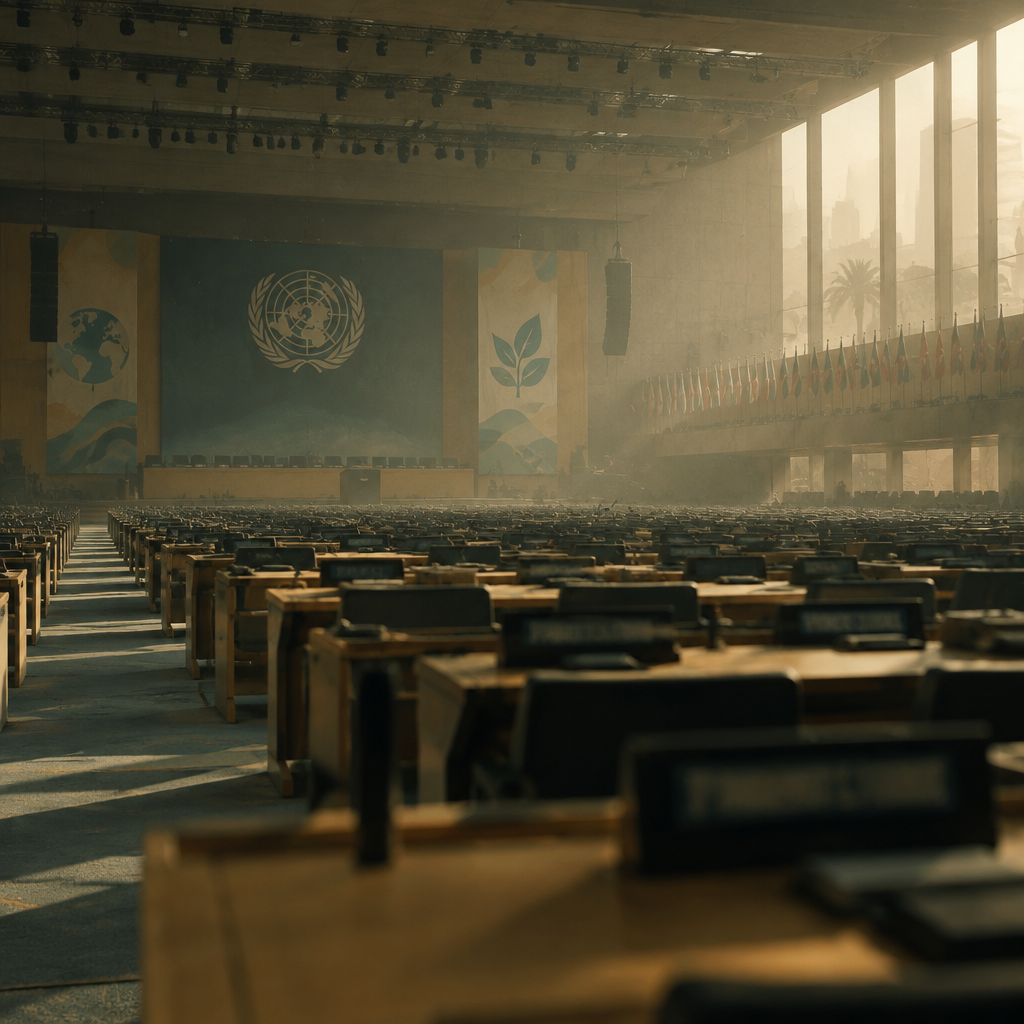
COP31 Now Has a Wishlist and Six Days to Turn It Into a Decision
The COP31 presidencies published their first compilation of elements for a possible cover decision on Friday, and it reads as a list of everything every bloc wants. Fossil fuel transition language and climate finance are the two fights. China has dropped its bid to host COP33.
The COP31 presidencies published their first "summary of reflections" on Friday, a compilation of the elements that negotiating blocs want to see in a possible cover decision. It is not a draft text. It is an inventory of demands, published so that parties can see their own language in print alongside everyone else's, and it marks the point where the Antalya conference stops listening and starts drafting.
The conference runs from 9 to 20 November. Six negotiating days remain.
The two fights
The first is fossil fuels. Whether the cover decision contains language on transitioning away from coal, oil and gas, and whether that language is framed as a commitment or an aspiration, has been the central dispute at every COP since Glasgow. The compilation format makes the disagreement visible without resolving it: the elements are listed, not reconciled, and a subject that appears in the summary can still vanish from the final text.
The second is money. Finance dominated the week, with developing countries pressing for public grants rather than loans and for a clearer route from pledges to disbursement. Nepal used its intervention to demand grants rather than debt, a position shared across a large bloc. The gap between what has been promised and what has been transferred is the recurring grievance of the process, and it is the one that determines whether adaptation targets are real.
Adaptation and electrification round out the agenda. The Climate Investment Funds named the first five countries for its COP31 adaptation programme on Friday: Bangladesh, Haiti, Kyrgyzstan, Morocco and Sierra Leone, alongside a regional initiative. That is the kind of concrete output the Turkish presidency has said it wants, framed as turning promises into projects rather than negotiating new ones.
China steps back
One development went largely unremarked. China withdrew its bid to host COP33, according to reporting from Antalya on Friday. Beijing had been the presumed host for 2028, and the withdrawal removes a diplomatic thread that had been running quietly through the conference. It also removes a bargaining chip: hosting a COP confers agenda influence, and China has used its weight in the process to resist binding language on fossil fuel phase-out.
The absence of a hosting bid does not change China's negotiating position. It does mean that the bloc that has been most resistant to phase-out language will not be managing the conference that follows this one.
Where the European Union sits
The EU came to Antalya arguing for accelerated global action and for implementation over new commitments, a framing that suits a bloc which has legislated its targets domestically and now wants others to match them. That position is easier to hold in a conference about delivery than in one about ambition.
It is also under pressure from two directions. Developing countries want the Union to put public money into adaptation at a scale the current budget does not provide for, and the Union's own contribution is constrained by a 2027 budget in which climate spending is competing with defence. And the phase-out language the EU supports requires the acquiescence of producers and of large emerging economies that have spent the week resisting exactly that.
The Union's credibility argument is that it legislated what others only promised. That argument is strongest when the cover decision contains something concrete about implementation, and weakest when it contains a list of aspirations with no numbers attached.
What to watch
Whether the presidencies move from a compilation to an actual draft text by Tuesday, because a first draft with ten days gone is a first draft that cannot be negotiated properly. Whether the finance section acquires a figure rather than a reference. And whether the fossil fuel elements survive the first cut, which is where they have died before.
Study Tips & Discussion
(0)Log in to join the discussion.
No comments yet — be the first to share your thoughts!
More in Energy & Climate
Related Articles
Europe's Greens Lose the Car: ENVI Votes to Cut the 2035 Target to 87.5%
6 min read
Washington Wants Russian Gas Back in Europe. Brussels Says the Law Says No
6 min read
European Gas Breaks €100 for the First Time Since 2022, and Berlin and Rome Start Blaming Each Other
6 min read