European Gas Breaks €100 for the First Time Since 2022, and Berlin and Rome Start Blaming Each Other
The Dutch TTF benchmark briefly touched €100 per megawatt hour on Wednesday, the first time since the 2022 energy crisis, with storage at roughly 75 percent and analysts warning high prices could persist for a year. Italy accused Germany of delaying storage filling to cut costs for Uniper and SEFE before privatisation. Berlin called the claims unfounded. The exchange exposes a gap in the EU's gas market architecture that no amount of storage regulation has closed.
Europe's benchmark natural gas contract briefly touched €100 per megawatt hour on Wednesday, the first time it has reached that level since the 2022 energy crisis, before settling marginally higher in subsequent trading. Storage across the bloc stands at roughly 75 percent of capacity, well below the levels that reassured markets in the previous two winters.
The immediate drivers are a combination of low inventories, colder seasonal forecasts and geopolitical risk premia linked to renewed instability in the Middle East. But the more revealing development came on Thursday and Friday, when the Italian and German governments began publicly assigning blame for the price level to one another.
Rome's accusation
Italy's position was set out by the chief executive of gas grid and storage operator Snam, who said Italian storage was almost 92 percent full and that Italy had met its obligations while other countries had not.
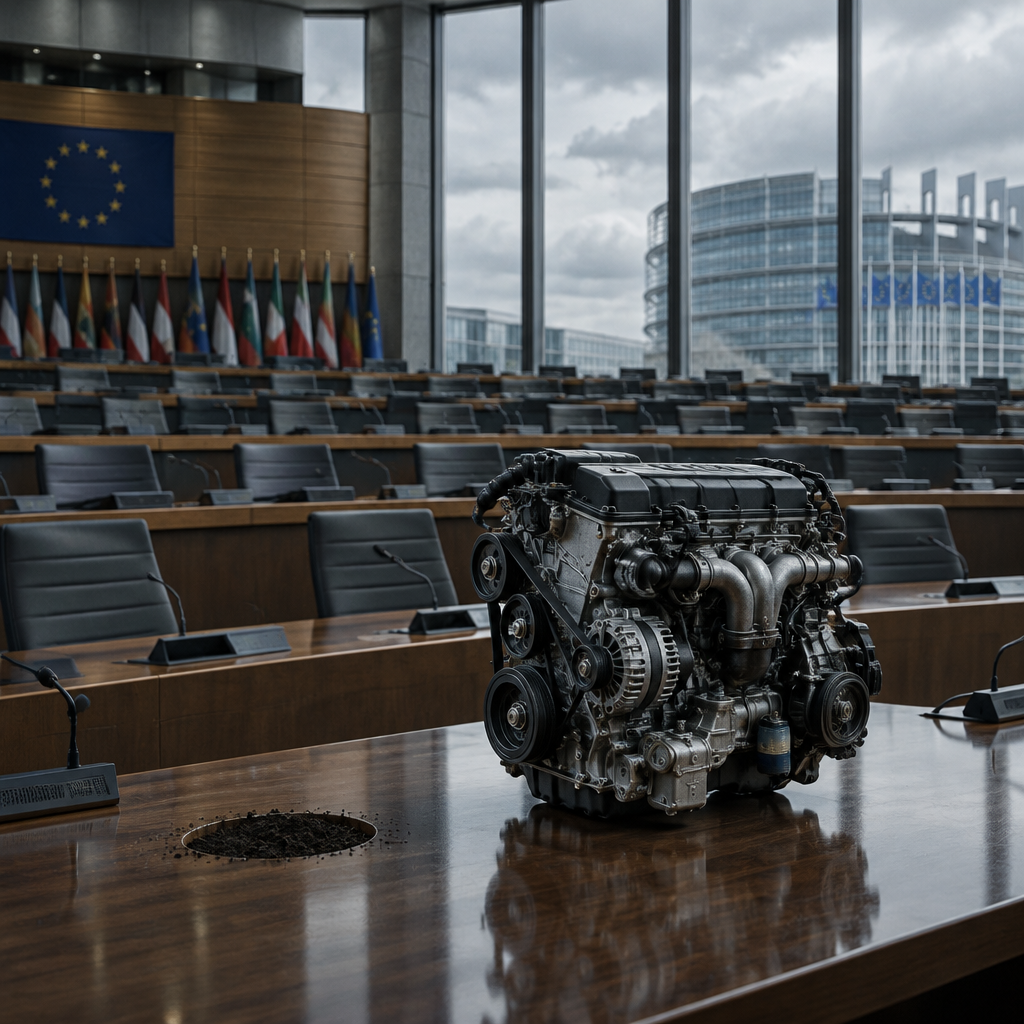
Italian officials went further, accusing Germany of having delayed filling its own storage facilities in order to reduce costs for Uniper and SEFE ahead of their privatisation processes. The claim is that Berlin prioritised the balance sheets of state-owned or state-rescued entities over collective European security of supply during the injection season, when prices were lower and storage economically rational to fill.
Berlin's rebuttal
The German government rejected the accusations on Friday, describing them as unfounded. Berlin's counter-argument rests on the structure of the German market: storage is largely operated commercially, filling economics depend on summer-winter spreads, and the federal government does not direct injection decisions outside the statutory filling thresholds set in EU and national law.
Both positions contain something true. Germany did meet the EU's binding storage targets through the injection season. Italy did fill to a noticeably higher level. And the EU's Regulation on gas storage, adopted in 2022 as an emergency measure, sets minimum thresholds but does not require any member state to fill beyond them, nor does it compensate a member state for the positive externality its stored gas provides to neighbours in a tight market.
The household paradox
On the same day as the wholesale spike became political, Eurostat published data showing that average EU household gas prices actually fell in the first half of 2026, to about €0.11 per kilowatt hour, a decline of 10.2 percent compared with the previous period. Household electricity prices in member states including Bulgaria and Malta remained among the lowest in the bloc.
The divergence is mechanical rather than mysterious. Household tariffs are set through regulated or semi-regulated mechanisms and reflect annual or semi-annual procurement, so they lag wholesale moves by six to eighteen months. The 2026 fall reflects procurement decisions taken when wholesale prices were low in 2025. If wholesale stays near €100 through the winter, the direction of household bills in 2027 will reverse, and the political consequences will arrive with it.
The structural problem nobody has solved
The deeper issue is that the EU created the world's most integrated gas market without creating a mechanism to pay for security of supply. Storage is a public good with a private cost, and each member state has an incentive to let a neighbour hold the strategic cushion. The 2022 storage regulation addressed the symptom by mandating minimum levels; it did not address the incentive.
Analysts quoted in European coverage expect elevated prices to persist for at least a year even under favourable conditions, which means the argument over who filled what, and when, will recur throughout the winter and into the negotiations over the Commission's planned energy affordability measures.
For industrial consumers, the practical consequence is that European gas-intensive production remains structurally disadvantaged against American competitors facing domestic prices a fraction of the European level. That competitiveness gap, rather than the storage arithmetic, is the item that will shape the political agenda into 2027.
Sources
- ↗Reuters, 28 October 2026: European gas touches €100 for first time since 2022
- ↗Reuters, 30 October 2026: Germany rejects 'unfounded' claims in spat with Italy over gas storage
- ↗Il Sole 24 Ore, 30 October 2026: Snam on storage levels
- ↗Eurostat, 30 October 2026: EU household gas prices decrease in first half of 2026
Study Tips & Discussion
(0)Log in to join the discussion.
No comments yet — be the first to share your thoughts!
More in Energy & Climate