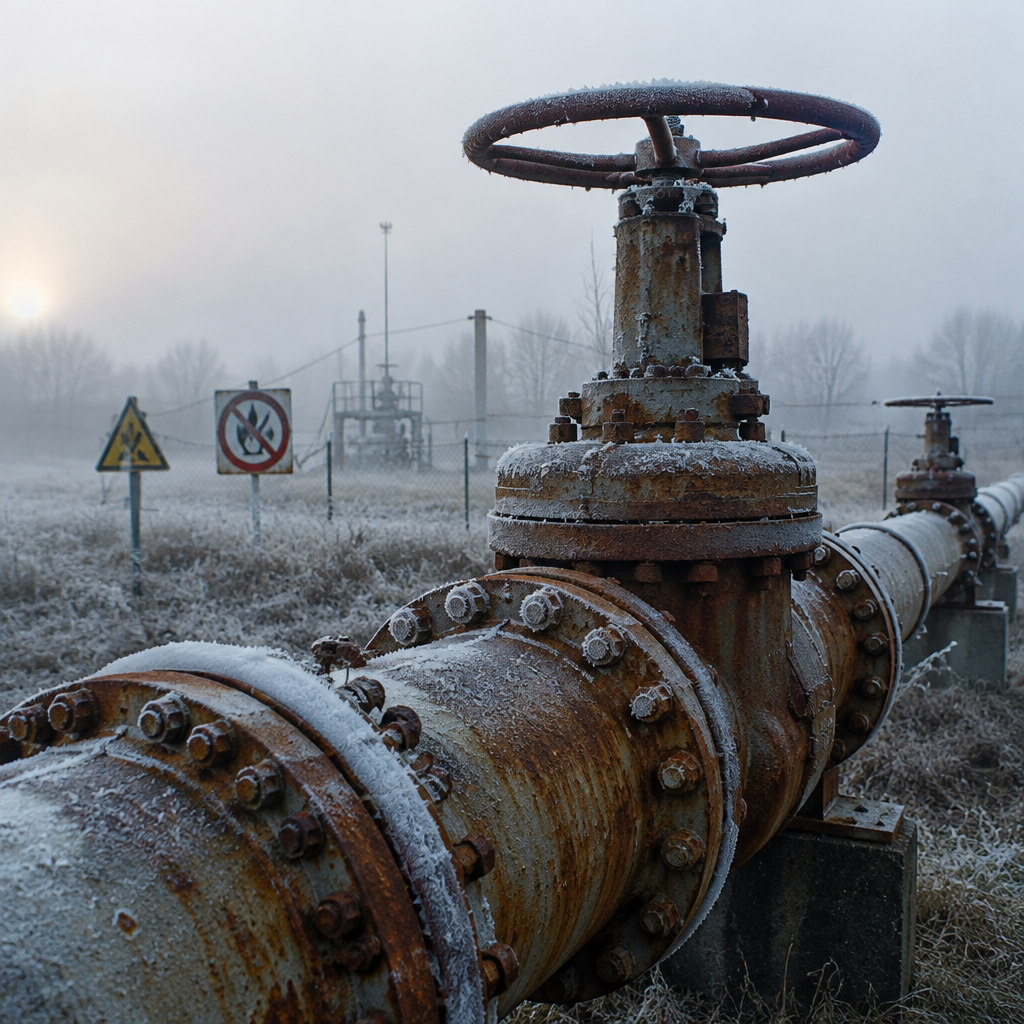
Washington Wants Russian Gas Back in Europe. Brussels Says the Law Says No
A US proposal would let Russian gas flow west again through a US intermediary, giving Kyiv transit revenue and Putin an incentive for an energy truce. EU officials say their phase-out is written into law and cannot be traded away.
The United States has proposed putting Russian gas back into Europe, sold through an American intermediary to get around sanctions, as the centrepiece of an energy ceasefire between Moscow and Kyiv. EU officials have now made their view plain: the law does not permit it.
The scheme, first reported by the Wall Street Journal and confirmed to the Kyiv Independent by people familiar with the matter, would route Russian gas to Europe through the Brotherhood pipeline, a network stretching roughly 4,500 kilometres from Siberian fields including Urengoy, through Russia and Ukraine, to Central and Western Europe.
What Washington is offering each side
For Kyiv, the incentive is transit revenue. Russia is unlikely to pay reparations directly, but Ukrainian officials could present transit fees as compensation from Moscow, and several people familiar with the discussions said the proceeds could flow into a US-proposed prosperity fund being negotiated as part of a postwar settlement.
For the Kremlin, the incentive is money and legitimacy: a reopened export route to the market it lost, and a demonstrable end to isolation in the energy sector.
US negotiators Steve Witkoff and Jared Kushner told their Ukrainian counterparts in September that several mechanisms could stop the Kremlin from using the revenue to fund the war. One option under consideration is an escrow account in a third country. They also said the arrangement would only be implemented after Russia ends the war or agrees a ceasefire.
The idea is not new. Ukrainian negotiators floated a version of it in Istanbul in 2022.
Why Brussels cannot simply say yes
The EU has committed in law to a complete phase-out of Russian gas by 2027, and the legislation is drafted specifically to stop exactly this kind of arrangement. The prohibition covers gas exported from Russia "either via direct export from Russia to the Union or via indirect export through a third country."
That clause is the plan's fatal problem. A US intermediary is a third country. The legal text does not care who signs the invoice.
Commission spokesperson Anna-Kaisa Itkonen was unambiguous: "Regardless of what happens, we are phasing out Russian gas and LNG. The last shipments will be finished by the end of next year."
The political answer is angrier than the legal one
Behind the technical response sits a decade of accumulated grievance. "We know far too well the hidden costs of being dependent on Russia for the purchase of fossil fuels. They have been weaponized, and we have been paying the price. We do not forget," said the Commission's chief spokesperson, Paula Pinho. "We should remind ourselves of who cut the supplies in the first place. It was Russia, in case it has been forgotten in the meantime."
A senior EU official was blunter about the method: "The Americans can propose what they want. That doesn't mean we will agree to it."
Officials also said they were frustrated by Washington repeatedly advancing initiatives without consulting the bloc first. Last month the EU roundly dismissed a US proposal to place €200 billion of immobilised Russian assets held in Europe under US custodianship. This is the second time in weeks.
Timing is doing a lot of work here
The proposal has surfaced at the worst possible moment for European consumers. Gas prices broke €100 per megawatt hour at the end of last week, for the first time since 2022, and Berlin and Rome have begun blaming each other publicly over storage levels. In that environment, a plan that promises cheaper gas has obvious political appeal in some capitals, whatever Brussels says.
There is also a strategic argument some EU officials are now making openly: the case for energy independence does not depend on how the war ends. "The Gulf blowing up shows just how important that energy independence is," one senior official said, adding that the shift away from fossil fuels and towards domestic sources would continue regardless.
What actually happens next
The plan needs the Commission to not enforce its own regulation, or the Council to reopen legislation that was hard-won. Neither is likely before the December European Council, and neither can happen without a ceasefire that Moscow has so far refused to accept. Kyiv, meanwhile, has been reluctant to criticise the idea in public, and privately some officials remain cautious about rejecting a proposal that puts money in Ukrainian accounts.
The deeper question is what the EU's word is worth. If a phase-out written into law can be reversed by a US intermediary and a peace process, then every sanctions instrument the Union has built since 2022 is a policy preference rather than a commitment. That is why the answer from Brussels has been so flat, and why it will be tested again.
Sources
- ↗Kyiv Independent, 2 November 2026: Ukraine, EU split over US-backed plan to bring Russian gas back to Europe
- ↗Wall Street Journal, 2 November 2026: U.S. Pushes to Restore Russian Gas Sales to Europe Via Ukraine
- ↗Meduza, 3 November 2026: Russia moves military equipment into Oleshky as the U.S. seeks incentives for Putin
Study Tips & Discussion
(0)Log in to join the discussion.
No comments yet — be the first to share your thoughts!
More in Energy & Climate
Related Articles
Europe's Greens Lose the Car: ENVI Votes to Cut the 2035 Target to 87.5%
6 min read
European Gas Breaks €100 for the First Time Since 2022, and Berlin and Rome Start Blaming Each Other
6 min read
EU Signals One-Year Delay to Methane Rules for Energy Imports
4 min read