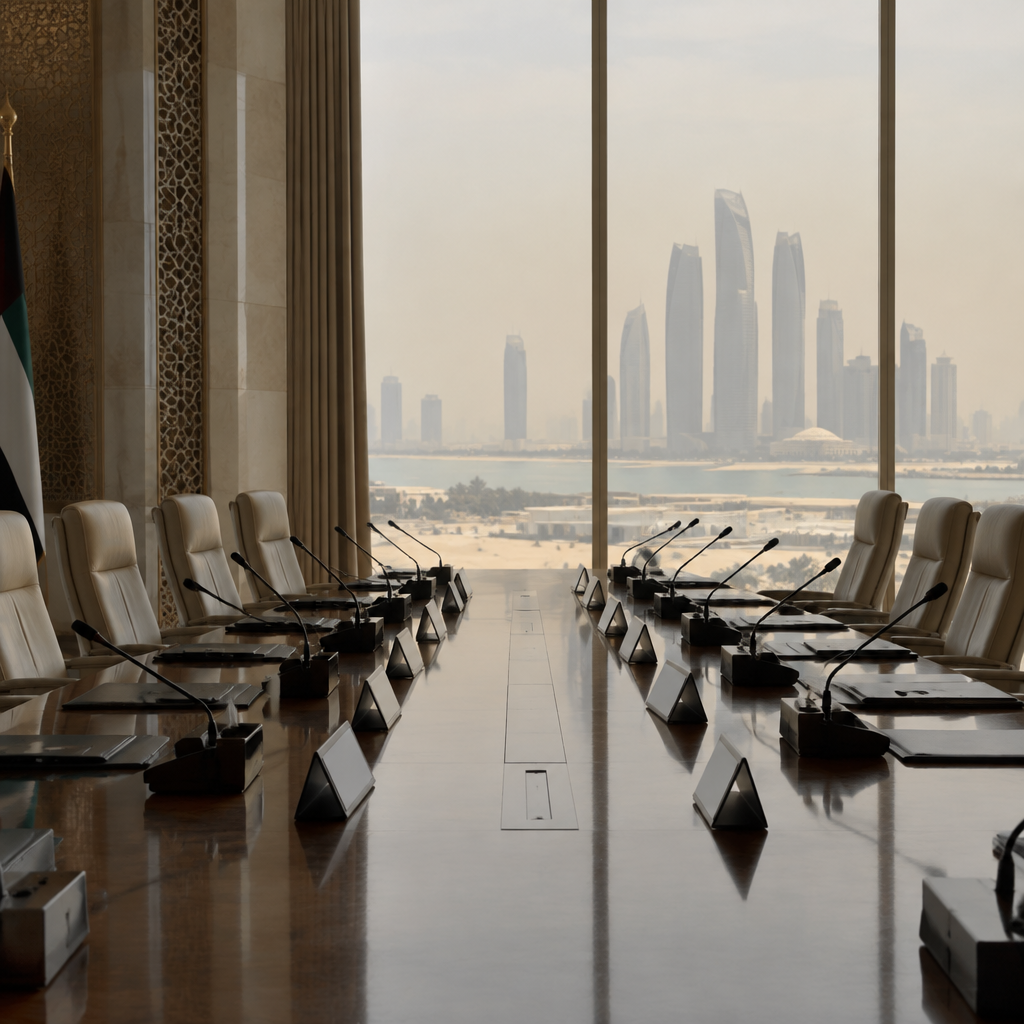
Abu Dhabi, 10 November: Witkoff Puts a Date on the Peace Talks
Trilateral negotiations between Ukraine, Russia and the United States will open in Abu Dhabi on 10 and 11 November, Steve Witkoff has announced. Europe is not in the room.
Trilateral negotiations between Ukraine, Russia and the United States will be held in Abu Dhabi on 10 and 11 November, US Special Envoy Steve Witkoff announced early on Tuesday.
"Discussions will focus on post-war security arrangements, de-escalation, humanitarian efforts, and next steps toward peace," Witkoff wrote on X. He said the talks would build on "the progress made in Kyiv, Oslo, and St. Petersburg toward a comprehensive, durable peace agreement that delivers lasting security for generations to come."
How it got here
The round follows weeks of shuttle diplomacy. Witkoff met President Volodymyr Zelensky in Oslo and Vladimir Putin in St Petersburg during October, and both leaders subsequently expressed willingness to talk. A Kremlin aide had said Moscow was ready to resume trilateral contacts after 4 November, Russia's National Unity Day, which is exactly the sequence now unfolding.
Zelensky has said one or two rounds of technical talks could pave the way for a trilateral summit involving himself, Donald Trump and Putin. The two presidents have not met directly since Russia's full-scale invasion in February 2022.
The agenda, and where it will stick
The technical track is expected to cover a potential energy and maritime ceasefire, an exchange of military and civilian captives, and the return of Ukrainian children abducted by Russia. Those are the items where movement is conceivable, because each can be structured as a discrete transaction rather than a political concession.
The core territorial question is where it breaks. The Kremlin has repeatedly rejected a ceasefire and demanded that Kyiv surrender the parts of Donetsk and Luhansk oblasts its forces have not captured. Ukraine has called for a ceasefire along the current front line.
Zelensky has drawn his own red lines: "Our security guarantees are our guarantees, and they cannot be dictated by the Russian side. Restrictions on our army and Ukraine's neutrality are not up for discussion."
Washington's own expectations are low
The most telling remark came from the US Secretary of State three days before the announcement. At a G20 foreign ministers meeting on 31 October, Marco Rubio told reporters: "I don't know if negotiated peace is achievable in Ukraine; that's what we're trying to find out." He added: "I don't think anyone here is claiming that we're on the verge of a negotiated settlement."
That is an unusual thing for a mediator to say days before convening talks. It is also honest, and it lowers the bar for what Abu Dhabi would count as success: process, not agreement.
The week that preceded it
The announcement lands on the back of a brutal few days. A US-brokered humanitarian truce in Russian-occupied Oleshky in Kherson region ended on 1 November after six days. Ukraine proposed extending it, and a Ukrainian official told AFP that "the Russians don't want to."
Ukraine's General Staff said Russian forces used the pause to improve their positions, bringing heavy equipment, weapons, ammunition and personnel into Oleshky and neighbouring villages and going house to house looking for basements to convert into new positions. A Sky News journalist reviewing Ukrainian drone footage reached the same conclusion. The Kremlin said Kyiv had also repositioned forces, and Dmitry Peskov called it "perfectly normal practice in situations like these."
On Sunday, Russian forces bombed a school used as a humanitarian aid centre in Komyshuvakha in Zaporizhzhia region, killing at least 26 people, then dropped further bombs on a shelter where people had taken refuge. Zelensky called it an "exceptionally horrific strike." The Kremlin has ruled out further humanitarian operations like Oleshky for now, while Zelensky told Fox News that Ukraine would welcome more local ceasefires along the front line.
Europe's problem
The EU is not a party to these talks. Its leverage is financial and legal: the €45 billion loan tranche for 2027 approved by the Commission on 30 October, the sanctions regime, and the frozen assets whose future Washington has already tried to reshape once.
That is real leverage, but it is leverage over Kyiv's finances and Russia's economy, not over the terms of a settlement being drafted between two presidents and an American envoy in the Gulf. Europe's security architecture is being negotiated in a room where the EU holds no chair, and the bill for it will still arrive in Brussels.
Sources
- ↗Kyiv Independent, 3 November 2026: Witkoff reveals location, date for new trilateral peace deal negotiations
- ↗Meduza, 3 November 2026: Russia moves military equipment into Oleshky as the U.S. seeks incentives for Putin
- ↗Kyiv Independent, 2 November 2026: Russian bomb strikes kill 26 at humanitarian aid centre in Zaporizhzhia Oblast
Study Tips & Discussion
(0)Log in to join the discussion.
No comments yet — be the first to share your thoughts!
More in Geopolitics & Security
Related Articles
A Russian Network Posed as Western Media During France's Riots. MAGA Accounts Got 17 Times the Reach
7 min read
Days After the Blue Wave, G7 Allies Get Their First Look at Trump's America
7 min read
Europe Gets a Congress It Did Not Vote For and Cannot Count On
5 min read