Von der Leyen Goes to the Black Sea, Where the War Has Already Arrived
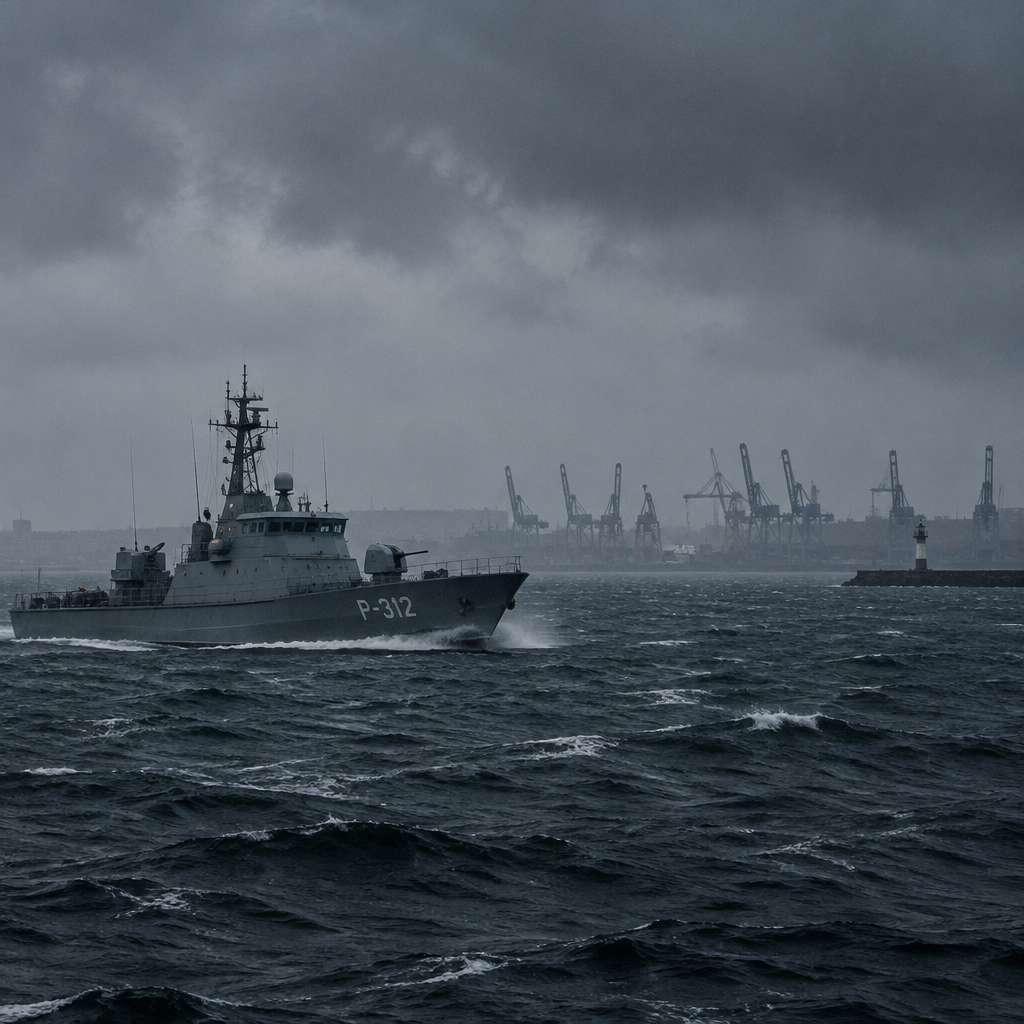
The Commission president visits Bucharest on Monday and Varna on Tuesday to push a civilian Black Sea Maritime Security Hub, as Romania and Bulgaria absorb a wave of drone strikes on merchant shipping and Brussels tries to hold its line on Moldova and the next seven-year budget.
Ursula von der Leyen travels to Bucharest on Monday and to Varna on Tuesday for what the Commission calls a tour of the Black Sea region, and the itinerary is a map of what Brussels now considers urgent: maritime security, energy, enlargement and the money to pay for all three.
In Bucharest she meets President Nicușor Dan at the Cotroceni Palace and Prime Minister Luca Niculescu. According to the president's adviser Valentin Naumescu, the agenda covers European defence and security with an emphasis on the Black Sea, European competitiveness including current energy issues, EU enlargement and Romania's support for Moldova, and negotiations on the EU's next multiannual financial framework for 2028 to 2034.
On Tuesday she is in Varna with Prime Minister Rumen Radev, and visits the Nikola Vaptsarov Naval Academy. The symbolism is deliberate: a naval academy in a Black Sea port, six days after a French maritime patrol aircraft was extended in Romania because merchant ships kept being hit.
What the hub actually is
The centrepiece is the proposed Black Sea Maritime Security Hub, part of the Commission's Black Sea strategy published in May 2025. Its stated objectives are maritime surveillance, the exchange of security information, protection of critical infrastructure and stronger cooperation against threats to shipping.
On 6 November, Romanian Defence Minister Ștefan-Radu Oprea discussed the hub's gradual development with Commission Executive Vice-President Roxana Mînzatu. The Romanian defence ministry confirmed that the mechanism would remain civilian, with military expertise contributing through cooperation between national institutions, and that it is intended to complement NATO activity rather than create a separate EU naval operation.
That distinction is doing a lot of work. The Black Sea is already covered militarily by arrangements among three NATO members: Romania, Bulgaria and Turkey established a joint mine-countermeasures task group in 2024, and in July 2026 agreed to expand cooperation toward protecting critical infrastructure including energy installations and underwater communications.
What the EU would add is a civilian layer: port authorities, maritime administrations, infrastructure operators, insurers, and a common picture of what is moving and what is being attacked. It is unglamorous and it is where the operational value sits, because a drone campaign against shipping is defeated by awareness and routing as much as by interceptors.
Why now
Because the war has already moved into the water. Last month there were seven strikes on cargo ships near Romania and Bulgaria, attacks that turned the Russia-Ukraine maritime war into a test of NATO's red lines and redrew shipping's risk map. France responded by extending the stay of a maritime patrol aircraft deployed to Romania to bolster surveillance after the deadly strikes on merchant vessels.
The economic consequences run through Romania's own future. The Black Sea remains a route for Ukrainian agricultural exports, regional energy supplies and international trade, and disruption raises insurance costs, delays cargo and complicates transport corridors. Romania's Neptun Deep offshore gas project, due to start production in 2027, will increase the country's weight as a supplier inside the EU and adds a new set of installations to defend.
The Moldova and budget threads
Two items on the Bucharest agenda matter more than their billing. The first is Moldova. Romania has been the most consistent advocate of Chișinău's accession track, and the 2026 enlargement package published on 4 November gave capitals a fresh set of scorecards, with Montenegro closing chapters and the Commission suggesting talks there could conclude this year. Bringing von der Leyen to Bucharest is a way of keeping Moldova inside the political envelope while the technical work runs.
The second is the 2028-2034 budget. The Commission's proposal is contested across capitals, and the negotiating impasse has already paralysed policy work elsewhere: proposals on AI chips, the Arctic and agriculture have been held up while the size of the framework is unresolved. A Black Sea strategy with no money attached is a communique, and von der Leyen knows it.
What a civilian hub cannot do
It cannot stop a drone. It cannot escort a bulk carrier or clear a mine. It cannot substitute for the Patriot interceptors Ukraine is short of, or for the air-defence ships NATO has not deployed into the Black Sea.
What it can do is make the Black Sea legible to Brussels: a single place where surveillance, incident reporting and infrastructure risk are assembled, with a budget and a mandate. That is the layer the EU is actually able to build, and it is the one that will still exist after this winter.
Sources
- ↗EU Today, 8 November 2026: Brussels turns towards the Black Sea as von der Leyen prepares security talks in Romania and Bulgaria
- ↗AGERPRES, 6 November 2026: Black Sea security, EU enlargement on agenda of President Dan's meeting with von der Leyen
- ↗Reuters, 5 November 2026: France extends maritime patrol plane's stay in Black Sea after cargo ship attacks
- ↗Reuters, 3 November 2026: War widens in the Black Sea in a test of NATO red lines
Study Tips & Discussion
(0)Log in to join the discussion.
No comments yet — be the first to share your thoughts!
More in Defense & Security
Related Articles
2,800 Troops, 11 Nations, No Americans: Europe Rehearses the Army It Would Send to Ukraine
7 min read

Kyiv Loses Its Water: Russia's Grid Campaign Reaches the Point Where Cities Stop Functioning
5 min read

Someone Is Setting Europe's Freezers to 50C. Now the Commission Is Investigating
6 min read