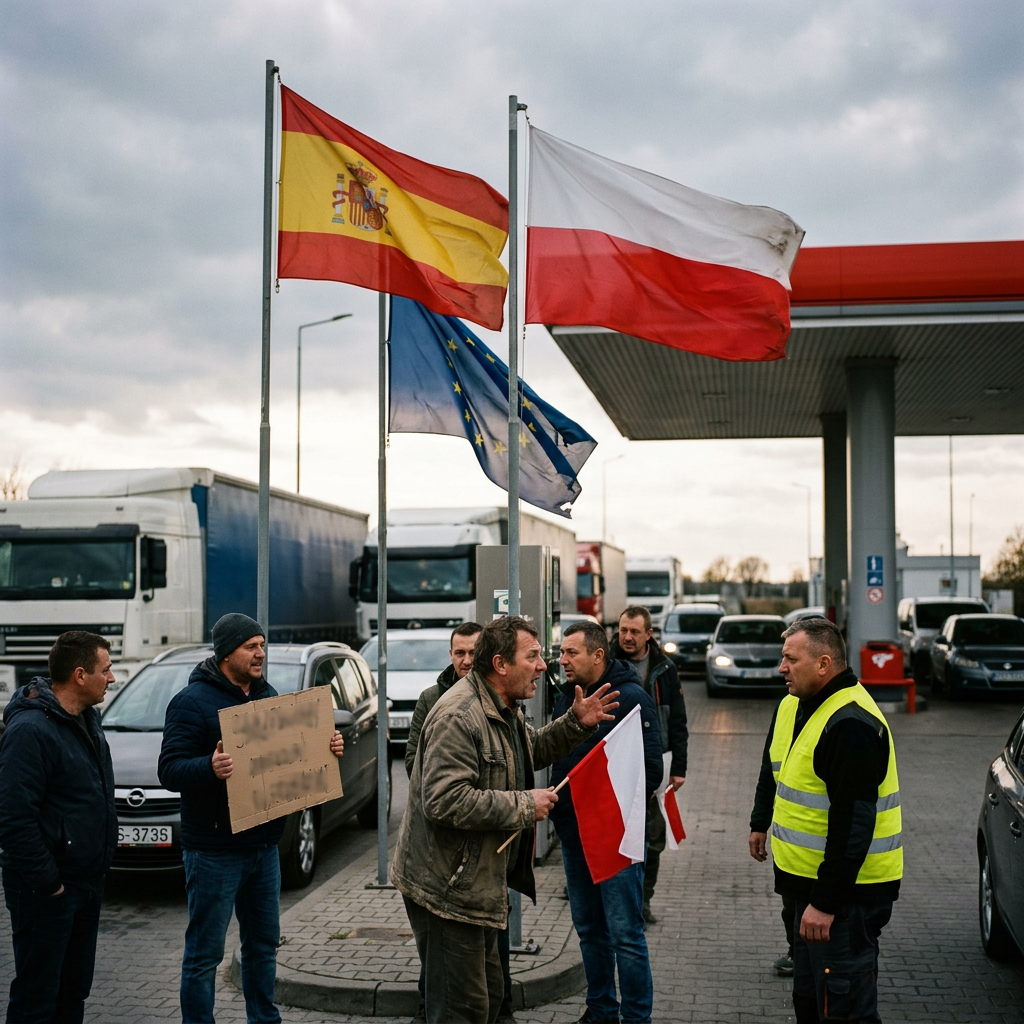
Spain and Poland Defy EU on Fuel Tax Cuts Amid Energy Crisis
Spain and Poland have cut fuel taxes to ease household energy costs from the Iran war. Brussels is calling the moves illegal under EU state aid rules — and both governments are pushing back.
Madrid and Warsaw have each introduced fuel tax cuts aimed at protecting households from skyrocketing energy prices caused by the ongoing conflict in the Middle East. Brussels' response has been swift and stern: the measures violate EU state aid rules and must be reversed or face enforcement action.
Both governments have rejected the ultimatum.
The Political Calculation
Energy prices have doubled since the start of the Iran war. Spanish and Polish voters are experiencing genuine pain at the pump and heating bill shock. Their governments are responding to that pain with tax cuts. Brussels, meanwhile, is lecturing them about fiscal rules designed for a world without regional wars.
The political mathematics is straightforward: a voter cares about their heating bill. They do not care about EU state aid architecture. National governments know that voters vote in national elections.
What Brussels Wants
The Commission argues that temporary, emergency fuel tax cuts distort the single market and create an uneven playing field across member states. Instead, Brussels prefers that all governments raise energy taxes together and then redistribute the revenue through centrally-coordinated mechanisms.
It is, from an economic perspective, the more efficient approach. It is, from a political perspective, a non-starter. No national government wants to tell voters "we will raise your taxes" — even if the end result is lower bills.
How This Ends
Spain and Poland will likely keep their tax cuts. Brussels will likely issue formal infringement procedures. Negotiations will drag on for months. In the end, either the Commission will back down or the two countries will accept fines — a face-saving compromise that preserves the principle while accepting political reality.
What this signals is that the EU's enforcement architecture works well in times of calm. It crumbles under stress, when national governments face voters and Brussels faces irrelevance.
Rules are only rules if governments believe they will be enforced. Europe is learning that lesson again.
Study Tips & Discussion
(0)Log in to join the discussion.
No comments yet — be the first to share your thoughts!
More in Energy
Related Articles
Brussels Hands Industry 121 Million Free Carbon Permits and Calls It Competitiveness
6 min read
Five Capitals Tell Brussels to Hurry Up and Let Britain Back Into the Electricity Market
6 min read
Council Gives Fossil Fuel Importers Another Year on Methane, and Argues It Is Doing It for Energy Security
6 min read