Five Capitals Tell Brussels to Hurry Up and Let Britain Back Into the Electricity Market
Germany, the Netherlands, Denmark, Belgium and Luxembourg have written to von der Leyen and Costa urging them to use the 20 November summit to set a path to concluding talks on UK participation in the EU's internal electricity market. The talks will not finish by the summit, and the sticking point is money: London would have to contribute to EU cohesion funds.
The leaders of five EU member states have written to the presidents of the Commission and the European Council urging them to use the 20 November EU-UK summit to set out a path towards concluding negotiations on British participation in the bloc's internal electricity market.
The letter, sent earlier this week and seen by POLITICO, is signed by German Chancellor Friedrich Merz, Dutch Prime Minister Rob Jetten and the leaders of Denmark, Belgium and Luxembourg. It argues that an agreement is "necessary to unlock the full potential of the North Sea" and to "transform it into the largest clean energy hub in the world", adding that it would "enhance Europe's energy security and contribute to a competitive economy that centres on access to clean and affordable energy".
"We call on you and the UK to agree during the Summit on a path towards the conclusion of these negotiations," the leaders wrote to Ursula von der Leyen and António Costa.
What is actually on the table
Brussels and London agreed last year to open talks on the UK rejoining the internal electricity market, which would mean British generation and interconnectors priced and dispatched under EU market coupling rules rather than through the thinner bilateral arrangements set up after Brexit.
Those talks have moved slowly and will not conclude on 20 November. An EU diplomat from a country pushing for a deal said the aim is to close them by the end of 2027. The summit is expected to produce a joint statement addressing the future of the negotiations, alongside sign-off on three other agreements: youth mobility, linking emissions trading systems, and alignment on agri-food rules.
The ask Brussels has made
The obstacle is financial. The Commission position, as described by officials, is that a non-member participating in the internal electricity market must make a contribution to EU cohesion funds. It is a politically awkward demand in London, because it converts market access into a visible budget line and because the number would be negotiated while the domestic argument is about bills going down.
One supportive diplomat framed it as investment rather than a fee. "The UK would be investing in access to a more integrated, secure and competitive European energy market, bringing lower energy costs, greater investment certainty and huge opportunities for British businesses and consumers." That is the language Brussels uses when it knows the price is the problem.
Why the North Sea is the real argument
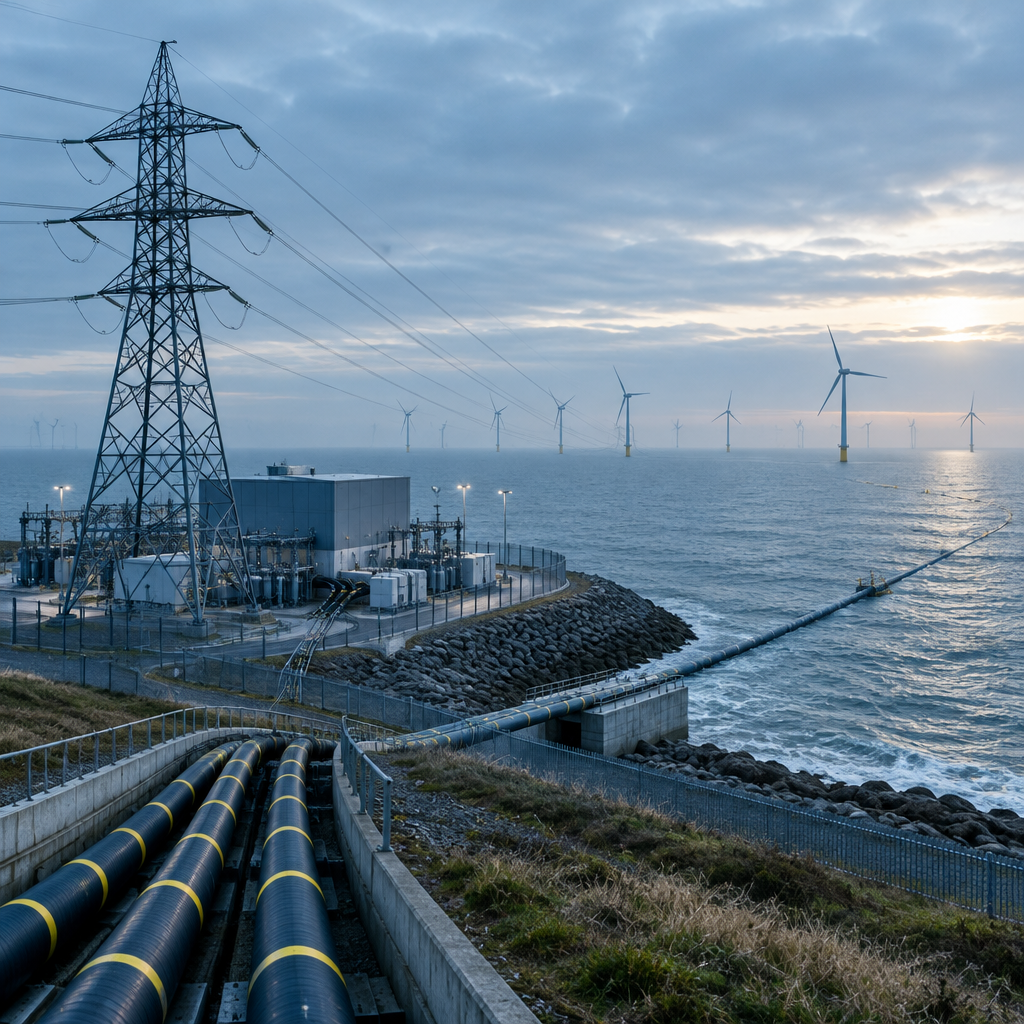
The North Sea is now the centre of European offshore wind build-out, and it does not respect the median line. A wind farm in British waters can supply Dutch demand; a German interconnector can balance Scottish output. Without market coupling, each crossing needs its own commercial arrangement, and investors price that friction into every project.
Energy UK, the British industry body, estimates that being outside the internal market creates additional costs of up to £10 billion over this parliament through higher bills and lower Treasury revenue. For Prime Minister Andy Burnham, who has made cost of living the organising theme of his government, that is the number that matters.
The politics on both sides
For the five signatories, the calculation is straightforwardly national. Germany wants a cheaper route to North Sea power as it manages an industrial base under price pressure. The Netherlands and Denmark are the two most exposed to North Sea build-out. Belgium and Luxembourg sit inside a dense interconnection web where Britain is a missing node.
For Burnham, the summit is the first real test of whether his reset can produce something tangible. The three agreements expected on 20 November are real but narrow: food and drink exporters get fewer checks, young people get mobility, and carbon markets get linked. Electricity is the one that touches household bills, and it is the one that will not be signed this month.
That is why the letter matters. It moves the demand from the technical level, where it has been parked for a year, to the leaders' level five days before they sit down. Whether it produces a date, or another joint statement about a path towards a path, is the thing to watch on 20 November.
Study Tips & Discussion
(0)Log in to join the discussion.
No comments yet — be the first to share your thoughts!
More in Energy
Related Articles
Brussels Hands Industry 121 Million Free Carbon Permits and Calls It Competitiveness
6 min read
Council Gives Fossil Fuel Importers Another Year on Methane, and Argues It Is Doing It for Energy Security
6 min read

The Strait of Hormuz Crisis: Europe's Second Energy Shock in Five Years
4 min read