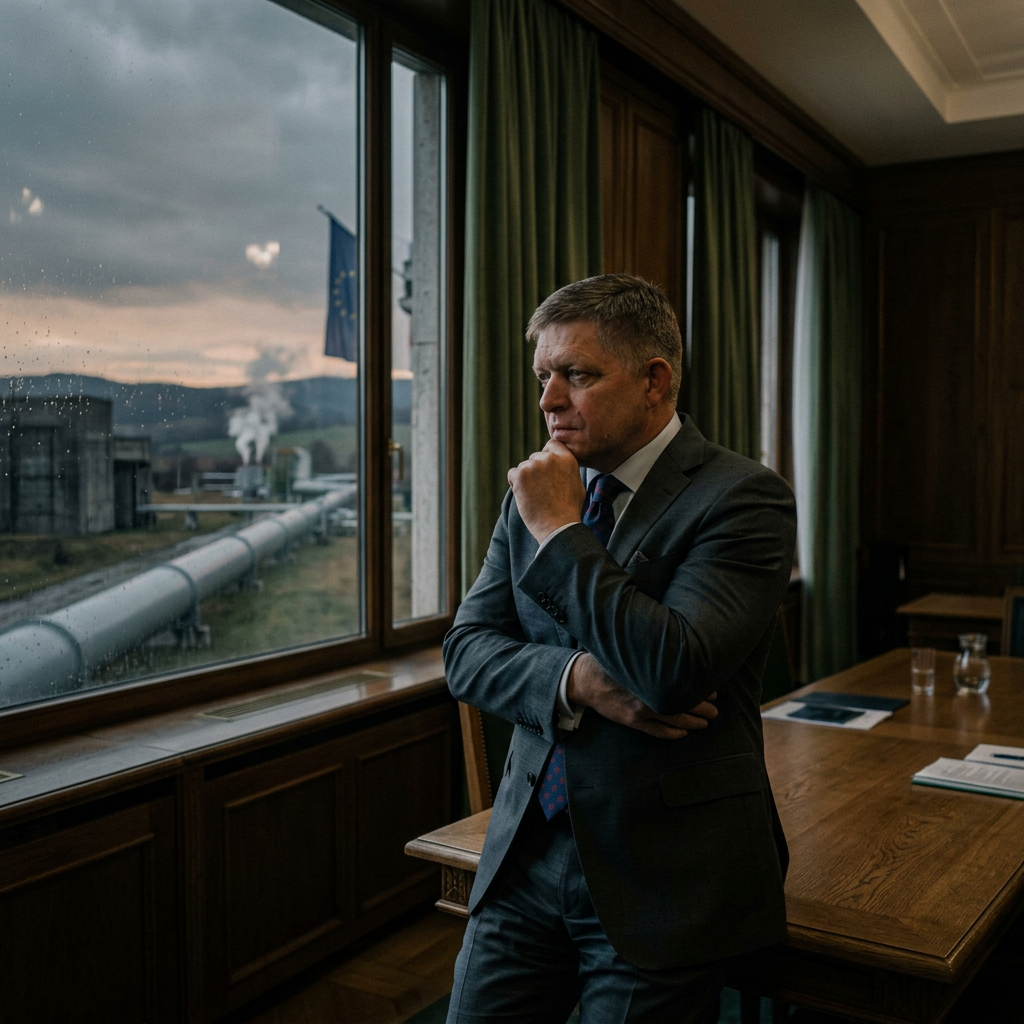
Fico's Gambit: Slovakia Pushes EU to Lift Russian Energy Sanctions
Slovakia's PM Robert Fico is calling for the EU to end sanctions on Russian oil and gas imports, citing the energy crisis triggered by the Iran war. The move reveals deepening cracks in EU unity on Russia policy.
On Saturday, Slovakia's PM Robert Fico called for the European Union to end sanctions on Russian oil and gas imports. His justification: the energy crisis stemming from the Iran war requires Europe to "renew dialogue with Russia" and source energy supplies from "all sources, including Russia."
It's an offer Brussels has heard before. And it reveals something darker about how geopolitical shocks reshape bargaining power inside the EU.
The Setup
Fico made the call after speaking with Hungarian PM Viktor Orbán — the second major EU leader openly pushing sanctions relief on Russian energy since the Iran war began. Together, Hungary and Slovakia are exploiting the Hormuz crisis to argue that EU Russia policy is a luxury Europe can no longer afford.
The timing is not subtle. Oil prices surged after the US-Israel war on Iran began on 28 February. The International Energy Agency has called the disruption the biggest oil supply shock in history. Into that panic, Fico steps with a simple pitch: forget ideology, get energy.
The Mechanism
Here's the mechanism: every six months, all 27 EU member states must unanimously renew the Russia sanctions package. A single veto from Slovakia, Hungary, or their allies can derail the entire regime — unless other member states negotiate with them. The Iran war has given Fico leverage he's been trying to build for years.
Zelenskyy and the Western capitals that support Ukraine are now facing a choice: push back on Russian energy imports, or let the sanctions architecture collapse over a commodities issue. Fico knows which way the pressure runs when energy prices are spiking and heating season is six months away.
The Bigger Picture
What Fico is doing is not unique to him. Budapest's Orbán has used the same playbook — threatening to block sanctions renewals in exchange for concessions. The Szijjártó-Lavrov recordings showed how coordinated this is.
But Fico's move is sharper because it targets a genuine European vulnerability: the energy crisis is real, the disruption is real, and the public pressure to "do something" is real. When people are worried about heating costs, EU unity on abstract Russia sanctions becomes much harder to defend.
The Russia sanctions regime was built to punish an invasion. It turns out it was also built on the assumption that EU member states wouldn't weaponise the unanimity rule on behalf of Moscow. That assumption is being tested.
Study Tips & Discussion
(0)Log in to join the discussion.
No comments yet — be the first to share your thoughts!
More in Energy
Related Articles
Brussels Hands Industry 121 Million Free Carbon Permits and Calls It Competitiveness
6 min read
Five Capitals Tell Brussels to Hurry Up and Let Britain Back Into the Electricity Market
6 min read
Council Gives Fossil Fuel Importers Another Year on Methane, and Argues It Is Doing It for Energy Security
6 min read