Defence & Security
Europe and Ukraine Launch Anti-Ballistic Missile Defence Coalition in Paris
15 July 2026·5 min read
Ukraine and nine European nations launched an anti-ballistic missile defence coalition in Paris on 13 July, aiming to build a shared European missile shield leveraging Ukraine's combat experience within 12 months.
PARIS — Ukraine and nine European nations announced the formation of a new anti-ballistic missile defence coalition on 13 July, launching an ambitious initiative to build a shared European missile shield that could be operational within 12 months.
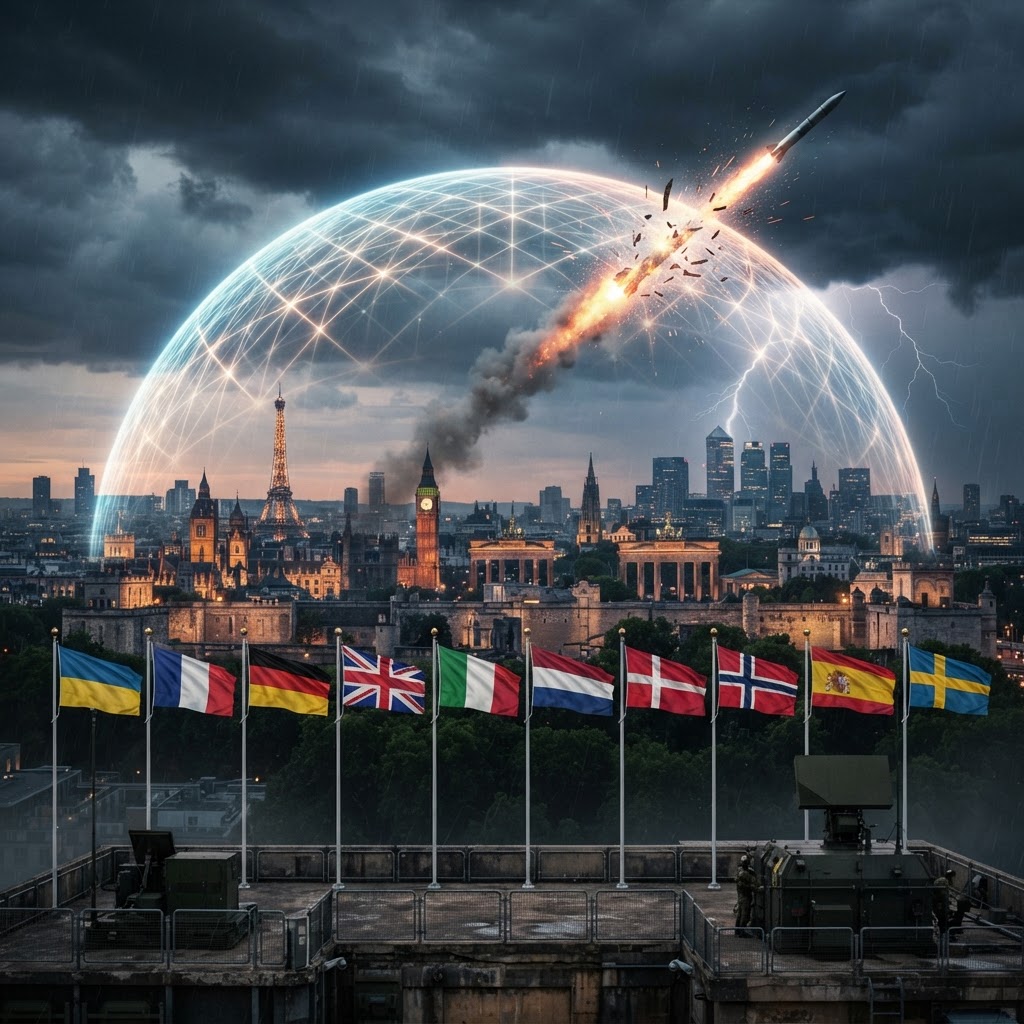
The coalition, announced during a meeting of the Coalition of the Willing in Paris, brings together Ukraine, France, Germany, the United Kingdom, Italy, the Netherlands, Denmark, Norway, Spain, and Sweden. The meeting was attended by Ukrainian President Volodymyr Zelenskyy and leaders of the partner nations, with representatives from more than 30 countries present.
"Our goal is to build a shared ballistic missile defence capability for Europe," the 10 countries said in a joint statement issued after the meeting. Ukraine's experience — gained over more than four years of defending against large-scale Russian missile and drone attacks — will play a central role in designing the system.
Zelenskyy said Ukraine and its European partners could develop a low-cost, mass-producible missile defence system within the next 12 months. The system would not only strengthen Europe's defence capabilities but could also be supplied to other countries facing similar threats.
The initiative is a significant step in the evolution of European defence cooperation. While NATO has long provided the framework for collective missile defence through systems like the Aegis Ashore battery in Romania and the proposed site in Poland, the new coalition represents a distinctly European effort — one that explicitly leverages Ukraine's unprecedented combat experience with missile interception at scale.
Ukraine has become the most missile-attacked country in Europe, and arguably the world, since Russia's full-scale invasion in February 2022. Kyiv has developed extensive expertise in detecting, tracking, and intercepting ballistic missiles, cruise missiles, and attack drones using a combination of Western-supplied systems (Patriot, IRIS-T, NASAMS) and domestically produced alternatives. That operational knowledge — what works, what fails, what can be produced cheaply at scale — is what the coalition aims to harness.
The focus on cost and mass production is telling. Existing Western missile defence systems are highly capable but extremely expensive and produced in limited quantities. A single Patriot interceptor missile costs approximately $4 million. The coalition's emphasis on affordability and scalability suggests a recognition that Europe needs quantity as much as quality — particularly if the threat environment continues to deteriorate.
The announcement comes at a critical moment for European security. Russia has intensified its missile campaigns against Ukrainian cities and infrastructure, and Moscow has threatened to expand targeting. Russian President Vladimir Putin warned that Moscow would respond "with several times greater force" to Ukraine's recent attacks on Russian oil refineries and other facilities. Kremlin spokesman Dmitry Peskov condemned the new alliance as a "coalition of warmongers."
The coalition also reflects a broader trend: European defence is increasingly being organised through flexible, ad hoc coalitions rather than exclusively through NATO's formal structures. The Coalition of the Willing itself — which has coordinated military support for Ukraine outside the NATO framework — has become a parallel security architecture, one that includes non-EU members like the UK and Norway alongside EU states.
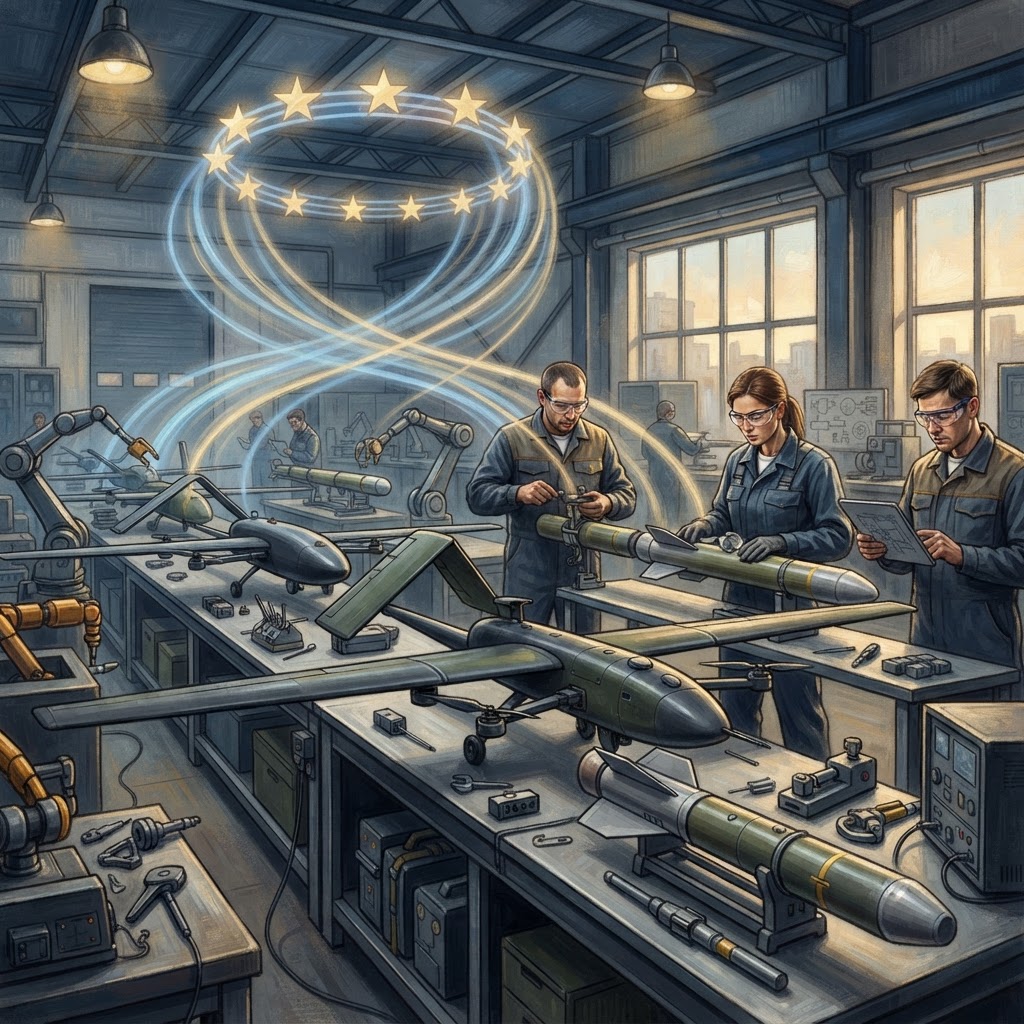
This development also intersects with the EU's own defence industrial strategy. The European Defence Industrial Strategy, the European Defence Fund, and the recently launched SAFE instrument all aim to build European defence manufacturing capacity. A joint missile defence project involving 10 nations could become a flagship for that ambition, demonstrating that European cooperation can produce tangible military capabilities rather than just policy papers.
The 12-month timeline is ambitious — perhaps overly so. Defence procurement typically operates on cycles of years, not months. But Ukraine's wartime innovation cycle has compressed development timelines dramatically, and the coalition's emphasis on leveraging existing technologies rather than building from scratch suggests the timeline may be more realistic than it appears.
For Europe, the coalition represents both a security investment and a strategic signal: that the continent is preparing to defend itself against the missile threat that Ukraine has faced daily, and that it intends to do so with European industry and European know-how at the centre.
Study Tips & Discussion
(0)Log in to join the discussion.
No comments yet — be the first to share your thoughts!
More in Defence & Security