The EU Opens a Training Mission Office Inside Ukraine, and Extends the Mission to 2028
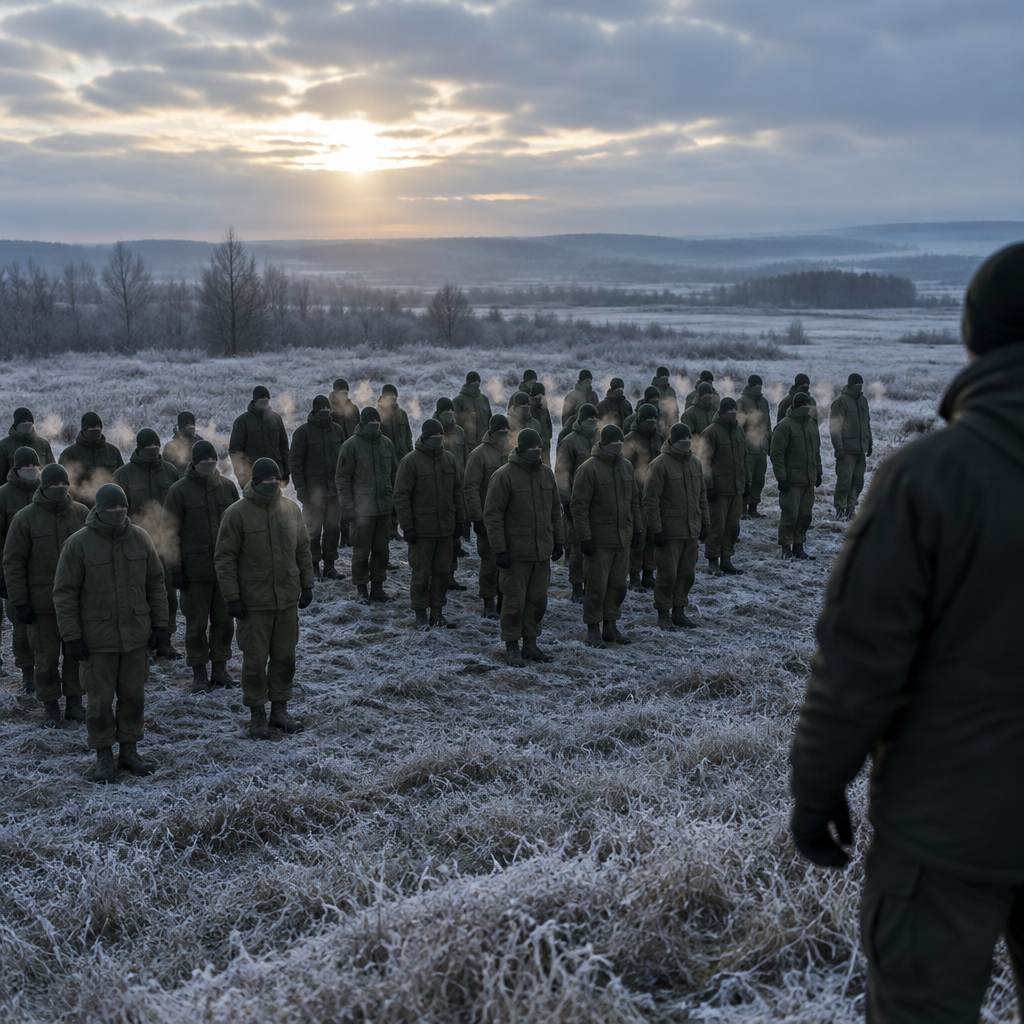
The Council extended EUMAM Ukraine until 15 November 2028 with almost €300 million, and for the first time gave the mission a standing representation on Ukrainian territory. The training still happens in Poland and Germany. What changes is who decides the curriculum.
The Council adopted a decision on Monday extending the mandate of the European Union Military Assistance Mission in support of Ukraine, known as EUMAM Ukraine, until 15 November 2028, with almost €300 million allocated for the two-year period. The decision followed a strategic review of the mission's work.
In the same decision, member states agreed to establish a representation of the mission in Ukraine, so that it can coordinate directly with the Ukrainian military leadership, the Armed Forces of Ukraine and international partners. The Council also added language on incorporating battlefield lessons into training and on strengthening military training in support of Ukraine's defence needs.
What is actually new
The extension is the continuation of a pattern. The mission was created on 17 October 2022 with an initial two-year mandate, a budget of about €107 million and a target of training 15,000 Ukrainian soldiers. It was renewed in November 2024 with nearly €409 million for the following two years, by which point around 63,000 had passed through. The Council now puts the cumulative figure above 100,000.
The genuinely new element is the representation. Until now EUMAM has trained Ukrainian personnel exclusively on EU territory, with the two main training commands hosted by Poland and Germany. A standing presence in Ukraine changes the coordination problem rather than the geography of the training: instead of programme designers in Brussels and Warsaw working from assumptions about what units need, the mission gets a channel to the general staff and to allied partners on the ground, and a mechanism for adjusting courses as the war changes.
That matters more than it sounds. The most persistent criticism of Western training programmes since 2022 has not been volume but relevance: courses designed for a different army, delivered to units that then had to unlearn parts of them. The Council's own language, on incorporating lessons learned and strengthening training in support of Ukraine's defence needs, is an acknowledgment of that gap.
The money and where it comes from
EUMAM is financed through the European Peace Facility, the off-budget instrument that has funded most of the EU's military support to Kyiv. That structure is the reason the mission can be extended by a Council decision rather than a budget negotiation, and it is why it has survived the arguments over the multiannual framework that are now consuming leaders.
Almost €300 million over two years is a smaller commitment than the €409 million agreed in 2024, which reflects the fact that the mission is not expanding its training footprint. The capital costs are being handled separately: the Netherlands, Germany, Ireland, Denmark and Luxembourg are funding the modernisation of two training centres inside Ukraine, a plan put forward earlier this year and fully financed after a Dutch contribution closed the remaining gap in September.
The coordination problem the EU has not solved
The decision states that EUMAM will keep working with non-EU partners including the United States, the United Kingdom, Canada and Norway, with the Coalition of the Willing, and with NATO's Security Assistance and Training for Ukraine command, known as NSATU, which coordinates the alliance's support.
That list is the honest description of a crowded field. Ukrainian training is currently delivered or supported by the EU mission, NATO's NSATU, bilateral programmes run by individual member states, the British-led Interflex operation and a Coalition of the Willing that has just finished exercising the force it would deploy after a ceasefire. The EU mission's stated role includes coordinating and harmonising the separate training programmes run by member states, which is a large task for a body with a €300 million budget.
Kaja Kallas said in September that member states had agreed the first steps: the two-year extension, and a coordination cell in Kyiv focused on battlefield experience and military education. Monday's decision delivers the formal version of that, several weeks later than announced.
Why the timing is not neutral
The decision lands at the start of a winter in which Russia is expected to intensify its campaign against Ukrainian energy, water and civilian infrastructure, and in which Ukraine's most acute military shortage is interceptors for Patriot and other air-defence systems rather than trained infantry.
Training a soldier takes months. Producing or buying an interceptor is a different kind of problem, with a different kind of lead time and a different set of suppliers. Extending a training mission to 2028 is a statement about the EU's expectation of a long war. It does not, by itself, address the thing Kyiv says it needs this month.
That asymmetry is worth holding on to when the mission's numbers are announced in future: 100,000 trained is a real achievement and a poor answer to a question about air defence.
Sources
- ↗Council of the EU, 9 November 2026: Ukraine - Council extends EU Military Assistance Mission mandate for two years
- ↗Ukrainska Pravda, 9 November 2026: EU extends training mission for Ukrainian military and decides to establish representation in Ukraine
- ↗Kyiv Post, 9 November 2026: EU Extends Ukraine Military Training Mission to 2028 With Nearly €300M in Funding
Study Tips & Discussion
(0)Log in to join the discussion.
No comments yet — be the first to share your thoughts!
More in Defence & Security