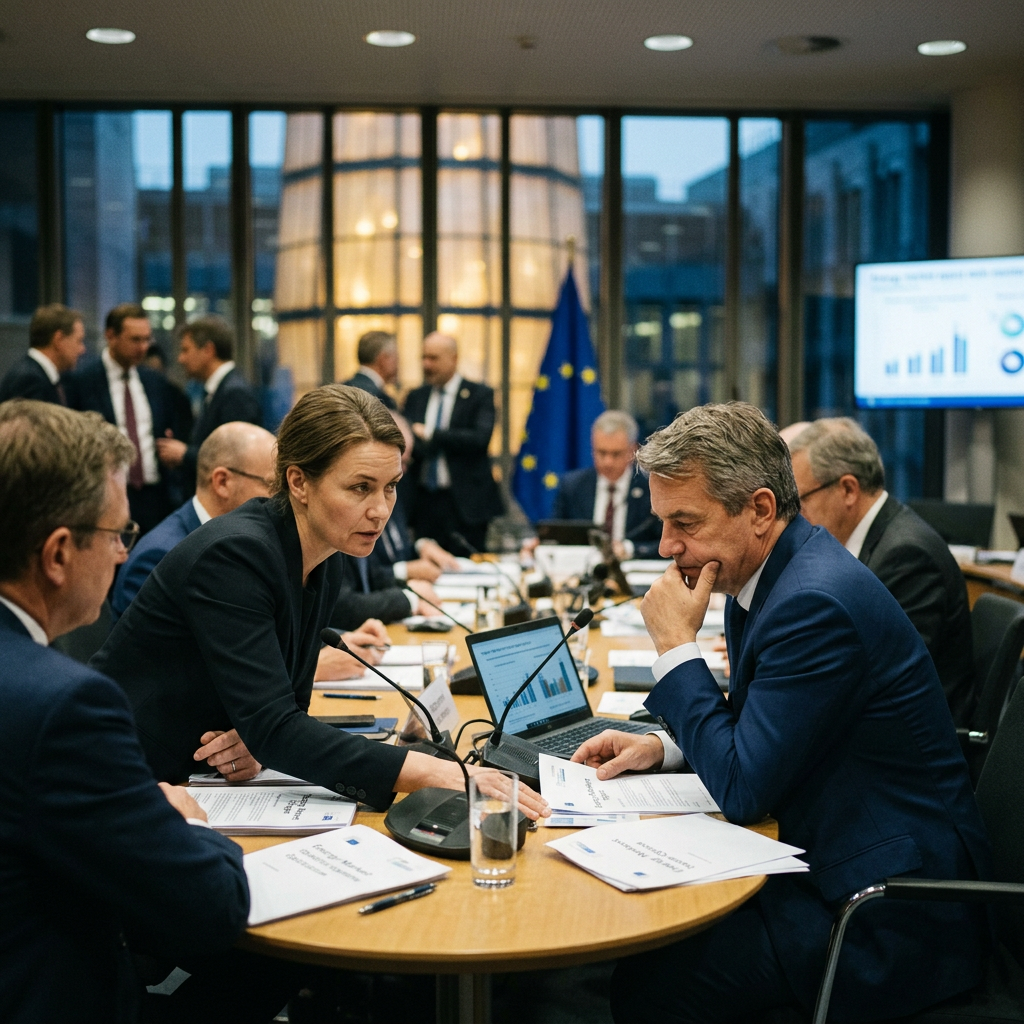
Five EU Nations Call for Windfall Tax on Energy Companies Amid Iran War Shock
Finance ministers from Germany, Italy, Spain, Portugal, and Austria are demanding a bloc-wide windfall tax on energy company profits as the Iran war drives fuel prices up 70% across Europe.
On April 4, five of Europe's most influential finance ministers sent a direct message to Brussels: the Iran war's impact on energy prices demands an emergency response that hits energy companies' balance sheets.
Finance ministers from Germany, Italy, Spain, Portugal, and Austria jointly called for an EU-wide windfall tax on energy sector profits, citing surging prices linked to the Middle East conflict and the disruption of the Strait of Hormuz.
The Numbers
Gas prices across Europe have spiked roughly 70% since the Iran war began in late February. Oil markets are volatile. Airlines are cancelling flights. And energy companies are seeing record profit margins as demand remains inelastic — consumers have to heat their homes and power their factories regardless of price.
The five ministers argue that a coordinated windfall tax would allow governments to use revenues to cushion the blow for households and businesses while avoiding the chaotic national responses that fragmented EU energy policy in 2022.
Who Pushed Back
Not everyone is convinced. The Netherlands and other countries with large energy sectors have expressed scepticism about retroactive taxation. The Commission has said it would study the proposal but has not committed to advancing it formally.
That said, the joint letter from Berlin, Rome, Madrid, Lisbon, and Vienna carries weight. These are not fringe voices. Germany and Spain are the bloc's second and fourth largest economies. If they move together on an issue, other capitals take notice.
The Political Subtext
The windfall tax push also reflects something deeper: a return to European crisis solidarity. In 2022, when Russia cut gas supplies, member states threatened to break ranks repeatedly. By the end, they held. This time, the initial instinct is the same — act collectively rather than raid one another's supply chains.
Whether the Commission follows through, and whether the full EU can reach consensus, remains to be seen. But the fact that it is even being debated at this level, and debated as a bloc-wide measure rather than national action, matters.
Europe is learning slowly that fragmenting works worse than acting together — even in a crisis.
Study Tips & Discussion
(0)Log in to join the discussion.
No comments yet — be the first to share your thoughts!
More in Energy
Related Articles
Brussels Hands Industry 121 Million Free Carbon Permits and Calls It Competitiveness
6 min read
Five Capitals Tell Brussels to Hurry Up and Let Britain Back Into the Electricity Market
6 min read
Council Gives Fossil Fuel Importers Another Year on Methane, and Argues It Is Doing It for Energy Security
6 min read