Voting Is Underway. Here Is Why Orbán Could Still Win.
Polls are open across Hungary. Most forecasters give Tisza the edge — but the system, the rural map, and the polling gap all tell a more complicated story.
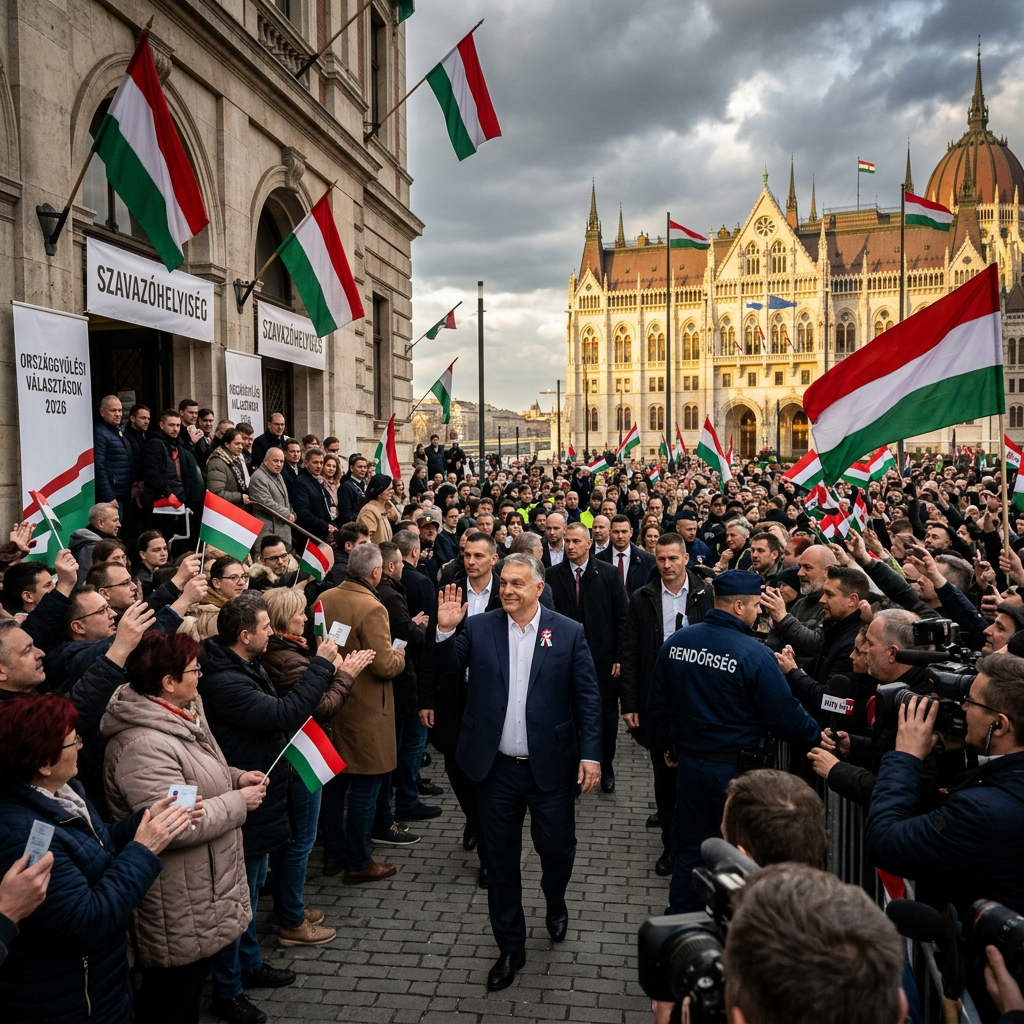
Polls are open across Hungary's 10,047 polling stations. Early turnout is reportedly at record levels. The international press has largely decided this is Tisza's day. But elections are not won by headlines — and Orbán has survived tighter moments than this.
Here is the case, laid out plainly, for why he could walk away with a fifth term tonight.
The Polling Gap Is Unprecedented — and Unresolved
The divergence between independent and government-aligned polling in this election is wider than anything seen in previous Hungarian cycles. Independent pollster Medián, surveyed in late March, gives Tisza 58% to Fidesz's 35%. Another independent firm, 21 Kutatóközpont, shows Tisza at 56% versus Fidesz at 37% among certain voters.
But government-aligned Nézőpont Institute — which in 2022 was closer to the actual result than most Western forecasters — puts the race at Fidesz 46%, Tisza 40%. Alapjogokért Központ's final pre-election poll from 1 April goes further: Fidesz at 50%, Tisza at 42%, with turnout intent at 74%.
Someone is dramatically wrong. In 2022, it was the independent pollsters. The question tonight is whether history repeats.
The Electoral System Works for Fidesz
Hungary's electoral architecture is not neutral. Since 2010, the Orbán government has redrawn district boundaries multiple times in ways academic analysts describe as systematic gerrymandering. In November 2024 — after Tisza's strong European Parliament performance — district lines were revised again, incorporating Fidesz-leaning areas into previously competitive seats.
Of the 199 parliamentary seats, 106 are decided by single-member districts. Even if Tisza wins the national popular vote, it may not translate into a parliamentary majority. Research by election forecasting platform Választási Monitor projects Tisza winning around 112 seats on aggregate polling — a majority, but far from the two-thirds supermajority needed to reverse constitutional changes.
Fidesz does not need to win the popular vote. It needs enough districts. And the map was drawn with exactly that in mind.
The Rural Firewall
Budapest is not Hungary. Tisza has strong support in the capital and among younger, urban, educated voters. The problem is that Orbán's base lives in places like Szabolcs-Szatmár-Bereg county — where Fidesz won 61% in 2022 — and in villages where state television is the dominant source of news and where the government's peace narrative lands without competition.
Tisza has toured rural Hungary. Magyar has held rallies outside Budapest. But converting sympathy into district wins in deep-rural Fidesz strongholds is a different proposition. Reports in recent weeks of alleged vote-buying in rural areas — cash and food distributed to secure hundreds of thousands of votes — add another layer of uncertainty that late-stage polling cannot fully capture.
Mobilisation: Fidesz Has Reserves, Tisza Does Not
Nézőpont's February analysis identified a structural asymmetry that has not gone away: Tisza supporters were already mobilised to the ceiling. Fidesz still had 200,000 to 300,000 inactive sympathisers who had not committed to voting. Orbán's nationwide tour in the final weeks was explicitly designed to activate them.
With record turnout reported this morning, the question is who those extra voters are. High turnout has historically been read as good news for the opposition. But in 2022, high turnout coincided with Fidesz's largest-ever vote share. The pattern is not as simple as it looks.
The Peace Argument
Orbán's closing message was simple: a vote for Tisza is a vote for war. For pensioners who lived through the Cold War, who watch government television, and who trust familiar faces, that argument does not need to be true — it just needs to feel plausible. Fidesz leads among over-50 voters by roughly 30 points in pro-government polling. These are the voters who turn out most reliably, in rain or sun, every election cycle.
Magyar's energy policy — reportedly including an end to household energy subsidies, privatisation of MVM, and full removal of Russian oil by 2035 — has been weaponised relentlessly by Fidesz. Government analysis claims it would cost households up to 145,000 forints per month. Whether accurate or not, the message hit its target demographic hard.
He Has Been Here Before
In 2022, the opposition was unified, energised, and polling competitively. Orbán won the largest vote share of any Hungarian party since the fall of Communism. He has entered every election he has contested since 2010 as a candidate — and left every one as Prime Minister.
Magyar is a stronger opponent than any Orbán has faced. But strength in the polls is not the same as strength in the booth. And Orbán has sixteen years of institutional infrastructure — in the media, in local government, in the civil service — that no polling firm can fully account for.
Polls close tonight. Results will follow. Do not read the headlines. Watch the rural districts. Watch Szabolcs. Watch whether the turnout surge came from Budapest or from the countryside. That is where this election will actually be decided.
Study Tips & Discussion
(0)Log in to join the discussion.
No comments yet — be the first to share your thoughts!