The Dutch Government Survived Its Tax Vote by Two Votes. Then It Started Falling Apart.
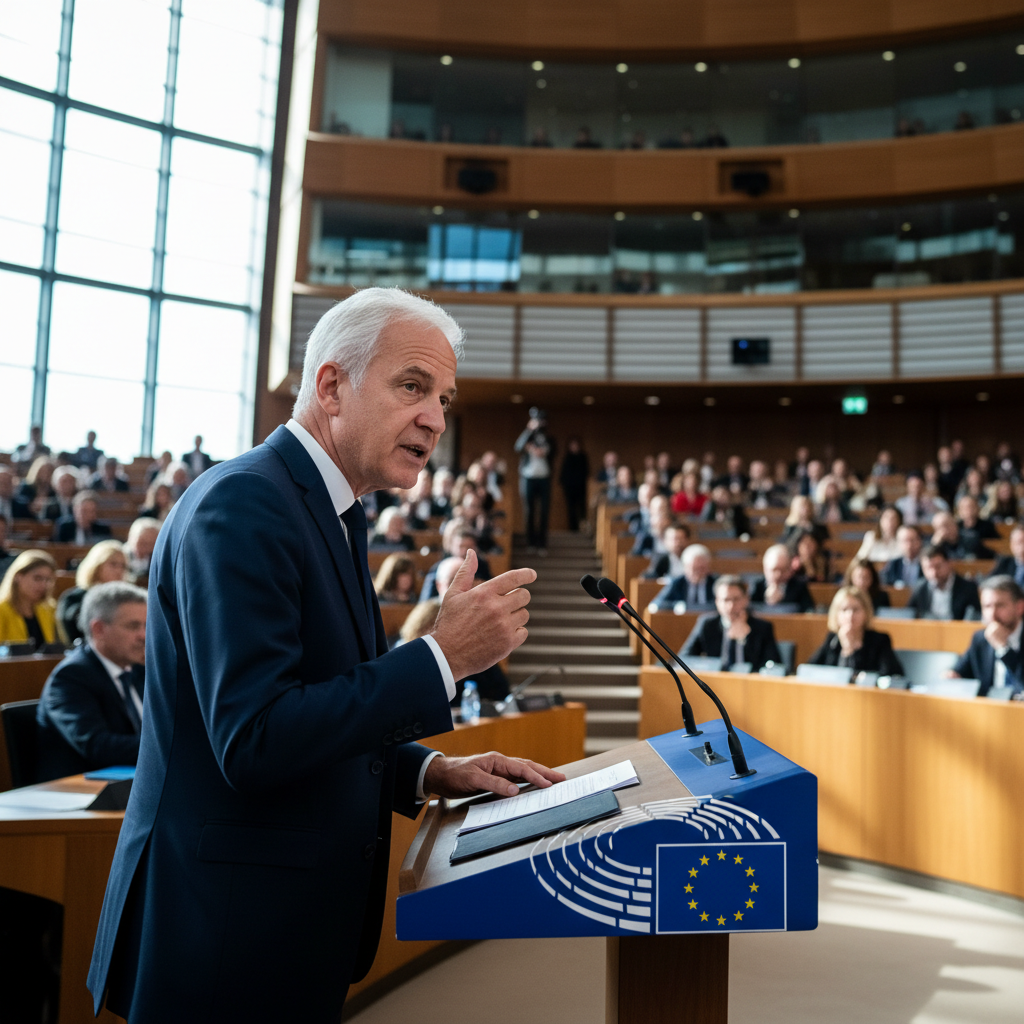
The Tweede Kamer passed the 2027 Tax Plan on Thursday night by 76 votes to 74. The margin was produced by D66 and the CDA cutting a deal with two opposition parties and leaving their own coalition partner, the VVD, outside it. Rob Jetten spent Friday in crisis talks and conceded his cabinet needs a serious fresh start.
The Dutch government did the arithmetic on Thursday night and it came to 76. The Tweede Kamer approved the 2027 Tax Plan by 76 votes to 74, the narrowest possible working majority in a 150-seat chamber, according to Dutch reporting.
The bill itself was not the story. The story was how the majority was assembled. Prime Minister Rob Jetten's D66 and the Christian Democratic Appeal, the CDA, negotiated a scaled-down version of the plan with two opposition parties, PRO and Volt, to shift roughly €1 billion of the tax burden from wealth towards income. The VVD, the third party in the governing coalition and the most fiscally conservative of the three, was not part of that deal and denounced it.
A minority cabinet doing minority arithmetic
The Jetten cabinet took office this year as a minority government of D66, VVD and CDA, with Jetten, 38, becoming the youngest prime minister in Dutch history. It has no majority of its own and has governed by assembling one bill at a time, which is normal practice in The Hague and works when the coalition is united. It does not work when the coalition is the thing being voted against.
On this bill, D66 and the CDA effectively formed a majority with the centre-left rather than with their own partner. That is procedurally legitimate and politically corrosive: the VVD now has a concrete, quotable example of being outvoted by its own cabinet colleagues, and it has used it.
Friday
Jetten convened crisis talks with senior leaders of his coalition partners on Friday, and the meeting ran for hours. Afterwards he conceded that the cabinet needs what Dutch reporters have translated as a "serious fresh start." That phrase, in the vocabulary of Dutch coalition politics, is what a prime minister says when he is trying to prevent a cabinet from collapsing without yet conceding that it might.
The cabinet is less than a year old. It was formed three months after an election that left parliament fragmented, and its coalition agreement was presented in January. Governments that enter crisis in their first year rarely recover the authority they lose in it, because the parties begin pricing an early election.
Why Brussels should care
The Netherlands is one of the four countries whose contributions keep the EU budget solvent, and it has spent a decade as the most consistent opponent of joint EU borrowing, of loosened fiscal rules and of anything that looks like debt mutualisation. The Dutch position in the Council is delivered by a government, and this government is currently unable to pass its own tax legislation without opposition votes.
Two files are affected immediately. The 2027 EU budget is in conciliation, and the Dutch finance ministry's line is one of the ones that matters. The negotiation over the 2028-2034 multiannual framework begins in earnest next year, and the shape of that negotiation was already going to be decided by whether the fiscally hawkish bloc has a credible leader. A caretaker Dutch cabinet cannot lead anything.
There is a domestic policy consequence too. The €1 billion shift that passed on Thursday is small in absolute terms and large in Dutch terms, because it touches the savings and assets regime that the VVD has defended for years. If the coalition survives, that vote is the template for how it will pass everything else: D66 and CDA, plus two opposition partners, minus the VVD. If it does not survive, the template is a campaign leaflet.
What to watch
Whether the VVD's parliamentary group stays in the cabinet and whether its ministers remain at their posts through the weekend. Whether PRO and Volt extract a permanent price for their support. And whether Jetten's "fresh start" produces a revised coalition agreement, because a government that renegotiates its own programme in month ten is announcing that the original one is dead.
Study Tips & Discussion
(0)Log in to join the discussion.
No comments yet — be the first to share your thoughts!