EU-Mercosur: Strategic Diversification or a Deal That Sells Out European Farmers?
The EU-Mercosur agreement moves toward provisional application in May 2026. Brussels calls it a strategic win. Critics call it a sellout of European agriculture — and they have a point.
The EU-Mercosur partnership agreement, politically concluded in December 2024, is now heading toward provisional application in May 2026. Brussels is celebrating. But before Europe pops the champagne, it's worth asking: who exactly is winning here — and who is quietly being asked to foot the bill?
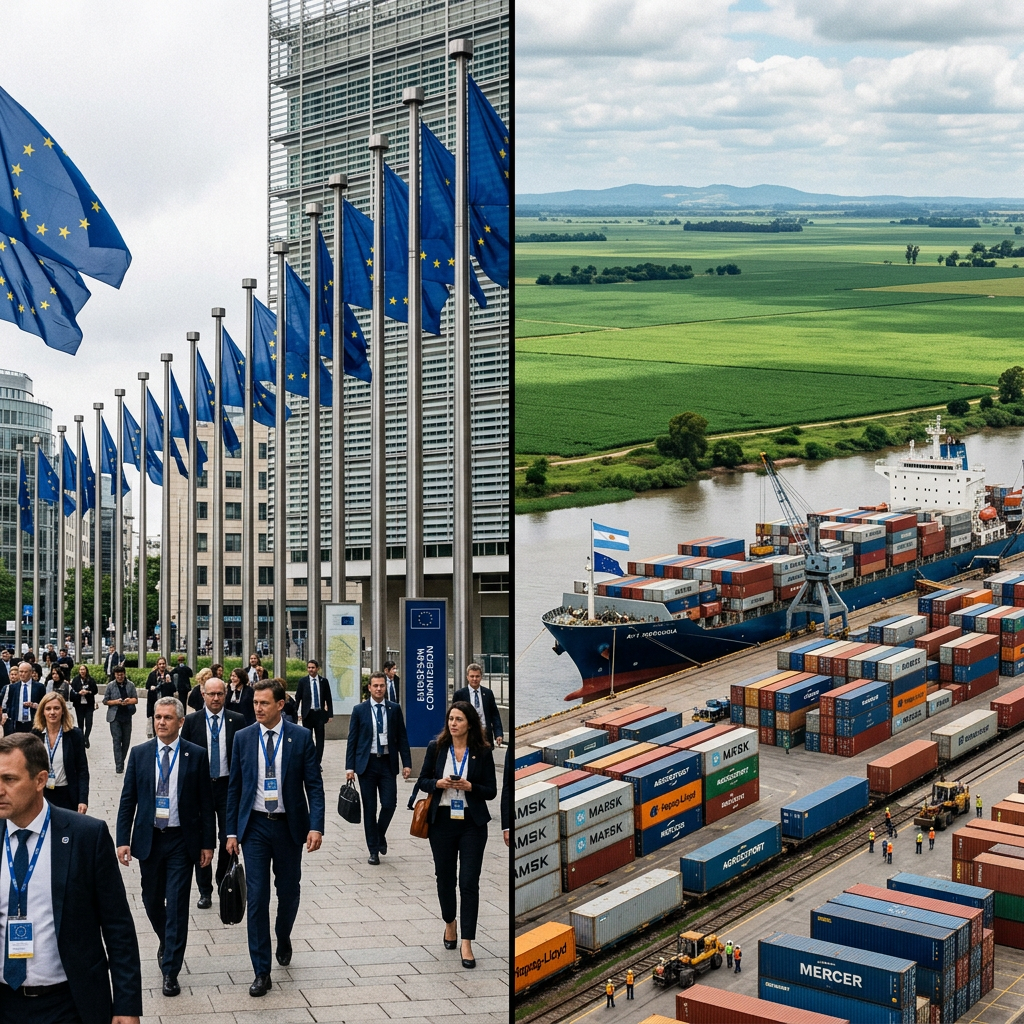
The deal removes significant tariff barriers between the EU and Argentina, Brazil, Paraguay, and Uruguay. In exchange, European manufacturers and exporters gain access to a market of 270 million people. In theory, a strategic coup. In practice, the picture is considerably messier.
The Farmer Problem Isn't Going Away
French, Irish, and Polish farmers have been vocal — and they are not wrong. The Mercosur bloc is one of the world's most competitive agricultural exporters. Lower standards on pesticide use, land management, and animal welfare give South American producers a structural cost advantage that EU farmers simply cannot replicate without abandoning the very regulatory framework Brussels spent decades building.
The safeguard clauses inserted into the deal — including the newly adopted Regulation 2026/687 — offer some protection. But safeguard mechanisms are reactive by design. They kick in after damage has been done, not before. Asking European farmers to absorb market shocks while waiting for a Brussels investigation to conclude is cold comfort.
The Deforestation Clause: More Promise Than Substance?
The deal includes commitments on the Paris Agreement and anti-deforestation pledges. Yet Brazil's agricultural expansion — much of it into what remains of the Cerrado and Amazon periphery — has not slowed. The EU's own deforestation regulation (EUDR) has been delayed under industry pressure. Expecting Mercosur partners to uphold standards the EU itself is struggling to enforce domestically strains credibility.
The Strategic Argument Has Merit — But Is Overstated
Brussels is right that supply chain diversification matters. South America's lithium and copper reserves are genuinely strategically significant, and reducing dependence on China is a legitimate goal. But trade agreements are blunt instruments for industrial strategy. Critical mineral access requires investment frameworks, not just tariff schedules — and Mercosur delivers more on agricultural liberalisation than on securing Europe's green transition supply chains.
What Comes Next
National parliamentary ratification will be bruising. France has already signalled resistance. The European Parliament's agricultural and environmental committees will scrutinise the deal closely. The question isn't whether the agreement passes — momentum is now too strong — but whether the side payments and adjustment funds for affected sectors will be adequate.
They almost certainly won't be. They never are.
The EU-Mercosur deal may well be a net strategic gain for Europe. But framing it as an unambiguous win papers over real costs being borne by real people — and Brussels should be honest about that.
Study Tips & Discussion
(0)Log in to join the discussion.
No comments yet — be the first to share your thoughts!