
Trump Meets Putin's Envoy, Skips Kyiv, and Describes a Deal Covering 'All of Europe'
President Trump said on 5 November that he met privately with Kirill Dmitriev, Putin's special envoy, at the White House and that a 'big agreement' involving more than Ukraine, possibly all of Europe, was close. He did not meet the Ukrainian delegation visiting Washington the same day, and gave no details.
US President Donald Trump told reporters in the Oval Office on 5 November that he had met privately with Kirill Dmitriev, Russian President Vladimir Putin's special envoy for investment and economic cooperation, and that a settlement of the war in Ukraine was close.
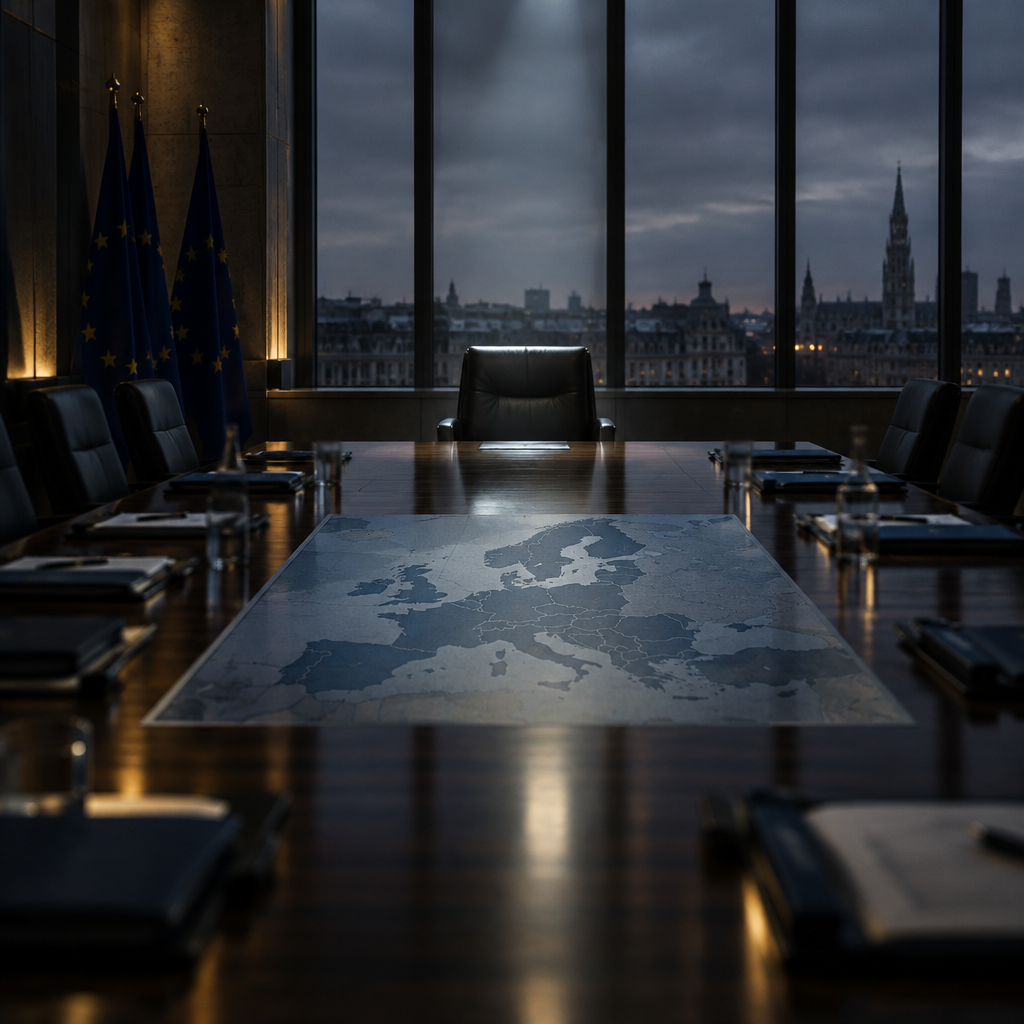
I think we're going to be very close to settling Russia-Ukraine, Trump said, declining to disclose what had been discussed. He went further on the scope: There's going to be an agreement. It's going to be a big agreement, and it's going to involve more than Ukraine, adding that the effort could encompass all of Europe.
He did not meet the Ukrainian delegation that was in Washington the same day.
The humanitarian channel running underneath
The Dmitriev meeting followed an event hosted by First Lady Melania Trump that brought Russian and Ukrainian representatives to the White House to build on the localised six-day truce she helped broker in Oleshky, in Ukraine's Kherson region, in October.
That ceasefire ran from 27 October to 1 November and allowed the evacuation of nearly 800 civilians from the Russian-occupied city, along with the delivery of food and medical supplies. Senior officials from both sides attended Thursday's gathering, including Dmitriev, Russia's human rights commissioner Yana Lantratova, David Arakhamia, leader of the Servant of the People party in the Ukrainian parliament, and Ukraine's parliamentary human rights commissioner Dmytro Lubinets.
Melania Trump used the occasion to argue for escalation from a local pause to something larger. Together, we can create something more enduring than a temporary ceasefire, she said, urging both sides to see the Oleshky truce as a spark in a world of darkness. She gave Putin's and Zelenskyy's representatives sealed envelopes containing personal letters for each leader. Dmitriev presented her with a painting by an 11-year-old girl, and Zelenskyy sent her the Order of Princess Olga, a Ukrainian state award recognising her role in the ceasefire.
The White House described it as the first time in American history that a first lady had personally brought representatives of two nations at war to the White House. The president did not attend.
What is actually known, and what is not
Almost nothing concrete is known about the substance under discussion. No text has been published. No framework has been described beyond Trump's characterisation that it would be big and extend beyond Ukraine. Previous predictions of imminent agreement from the same source have not materialised, and this one carries the same evidentiary weight: a president's statement to reporters, without documents.
The one verifiable shift is institutional. Negotiations have visibly accelerated in recent weeks, with an EU-hosted reconstruction and security meeting in Brussels this week, the Oleshky truce, and now a direct presidential meeting with a Kremlin envoy in the Oval Office on a day when Kyiv's representatives were in the building but not in the room.
Why 'more than Ukraine' is the phrase to watch
If the framework genuinely covers European security rather than only Ukrainian territory, the questions it must answer are the ones Europe has been arguing about for three years: what security guarantees Ukraine receives and from whom, what happens to sanctions and to frozen Russian sovereign assets, what limits apply to Ukraine's force posture and to NATO's presence, and whether any arrangement touches the post-Cold War security order in a way that requires European consent.
None of those can be implemented without European participation, because the sanctions are EU sanctions, the assets are largely held in Europe, and the reconstruction money is mostly European and American. A bilateral framework that Europe is asked to ratify after the fact is precisely the outcome the EU has spent a year trying to prevent.
This is the context in which Giorgia Meloni's letter to António Costa on the same day should be read. Her complaint that Europe is all over the place, and her demand for a single representative, are not procedural housekeeping. They are a response to a negotiating track that is moving while the EU has not decided who speaks for it.
The Dublin test
EU leaders meet informally in Dublin on 13 November, the day after the European Political Community summit. The agenda now includes, at Meloni's request, the question of how Europe speaks with one voice on Ukraine. Costa has agreed the principle and named no mechanism.
What Europe will want from Washington before then is a briefing on what was discussed in the Oval Office. What it is likely to get is a president describing an agreement that involves all of Europe to journalists, without telling any European government what it contains.
Study Tips & Discussion
(0)Log in to join the discussion.
No comments yet — be the first to share your thoughts!
More in Geopolitics
Related Articles

Brussels Is Writing Its 22nd Russia Package, and This Time the Trigger Is Arson and Drones
6 min read

Europe Has a Seat at the Table Now. It Still Cannot Agree Who Sits In It
7 min read
Kallas Tells Washington What Brussels Has Never Said Out Loud: 'We Will Not Implement It'
7 min read