Finland Jails a Russian Captain for 130 Kilometres of Dragged Anchor and Two Broken Cables
Helsinki District Court convicted the Russian captain of the cargo ship Fitburg and an Azerbaijani crew member of aggravated criminal damage on 5 November, finding they intentionally dragged the anchor along the Baltic seabed for about 130 kilometres, severing two telecommunications cables. Sentences were three and a half years and two years ten months, with €1.9 million in damages.
A Finnish court on 5 November convicted the Russian captain of the cargo ship Fitburg and a senior crew member of aggravated criminal damage for severing two undersea telecommunications cables in the Gulf of Finland, and sentenced them to prison.
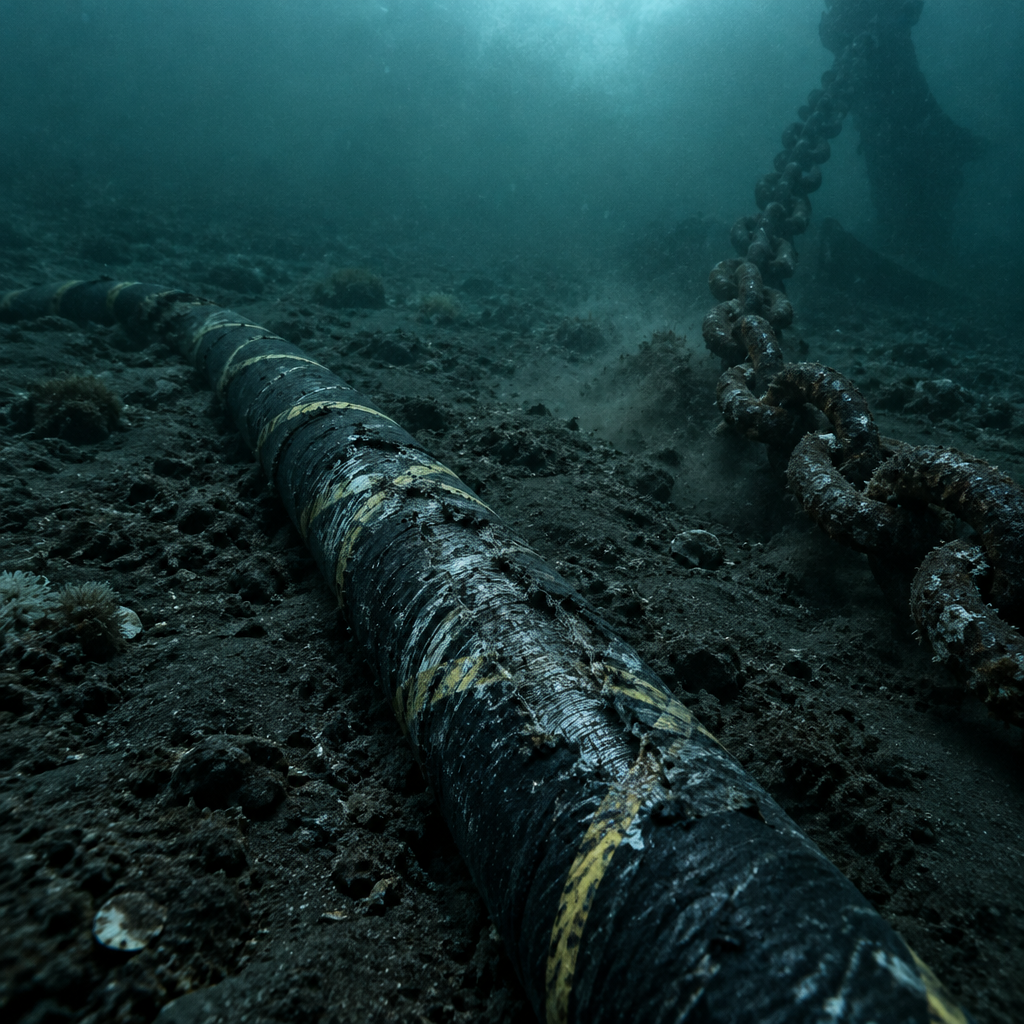
The Helsinki District Court found that the two men intentionally dragged the vessel's anchor along the seabed for approximately 130 kilometres, cutting the cables linking Finland and Estonia. The captain, a Russian national, was sentenced to three years and six months. The crew member, an Azerbaijani citizen serving as boatswain, received two years and ten months.
They were ordered jointly to pay around €1.9 million in damages, with the captain responsible for roughly €85,000 in addition. Both denied wrongdoing and challenged Finland's jurisdiction over the case.
How the case was built
Finnish authorities seized the Fitburg on 31 December, after discovering the vessel dragging its anchor in Finland's exclusive economic zone. Police said at the time that the ship had been dragging for hours before it was intercepted.
The ship was en route from St Petersburg to Haifa in Israel with a crew of 14 when the incident occurred. The length of the drag, and the fact that it continued across the seabed well beyond anything resembling a navigational accident, formed the evidential core of the court's finding of intent. Aggravated criminal damage under Finnish law requires that the act be deliberate and that the harm be substantial, and the court's statement reflects both elements.
Why the charge matters as much as the sentence
Since 2022 the Baltic has seen a sequence of incidents involving cables, pipelines and gas infrastructure, and each one has been met with a version of the same answer: an investigation, expressions of concern, and a finding that intent could not be established. The Nord Stream ruptures remain unresolved in attribution. The Estlink 2 power cable and four telecoms cables were damaged on Christmas Day 2024 by the tanker Eagle S, a vessel widely linked to Russia's shadow fleet, and that case has moved through Finnish courts on a separate track.
What Helsinki has now established is a factual and legal precedent: anchor dragging across 130 kilometres can be proved to be intentional, prosecuted as a serious crime, and punished with imprisonment and a damages award. That is a lower bar than attributing an act to a state, and it is a much more usable one for coastal states deciding how to respond to the next incident.
The limits of the verdict
Three things were not decided. The court did not find that the Russian state ordered the act, and there is no public evidence in the record establishing a chain of command. The owner and operator of the vessel face no criminal liability in this judgment. And the remaining twelve crew members were not convicted.
The damages award, roughly €1.9 million, is a civil remedy against two individuals who may have limited assets, which makes enforcement uncertain even where the judgment is clear.
The wider infrastructure problem
Europe's seabed carries the overwhelming majority of its intercontinental data traffic and a growing share of its electricity interconnection. It is also, as a physical matter, almost impossible to protect. Patrol coverage of the Baltic is finite, the water is shallow enough for anchors to reach cables, and the density of commercial traffic means distinguishing hostile behaviour from negligence requires real-time monitoring that no coastal state currently maintains across its whole exclusive economic zone.
NATO responded to the pattern by launching Baltic Sentry, a patrol and monitoring mission involving frigates, maritime patrol aircraft and a standing multinational response. Finland has legislated to strengthen protection of undersea infrastructure, and the Commission's 2027 work programme includes a European Security Emergency Protocol intended to let the EU respond faster to threats of exactly this kind.
The verdict changes the discussion in one specific way. Until now, deterrence rested on the threat of detection. What Finland has produced is the threat of conviction, which is a harder thing for an operator to price when accepting a contract in the Baltic.
Sources
- ↗DW, 5 November 2026: Finland court jails captain and crew member over Baltic cable sabotage
- ↗Reuters, 5 November 2026: Finland court convicts Russian captain, Azerbaijani crew member over Baltic Sea cable damage
- ↗Courthouse News, 5 November 2026: Finnish court jails Russian captain over Baltic cable sabotage
Study Tips & Discussion
(0)Log in to join the discussion.
No comments yet — be the first to share your thoughts!