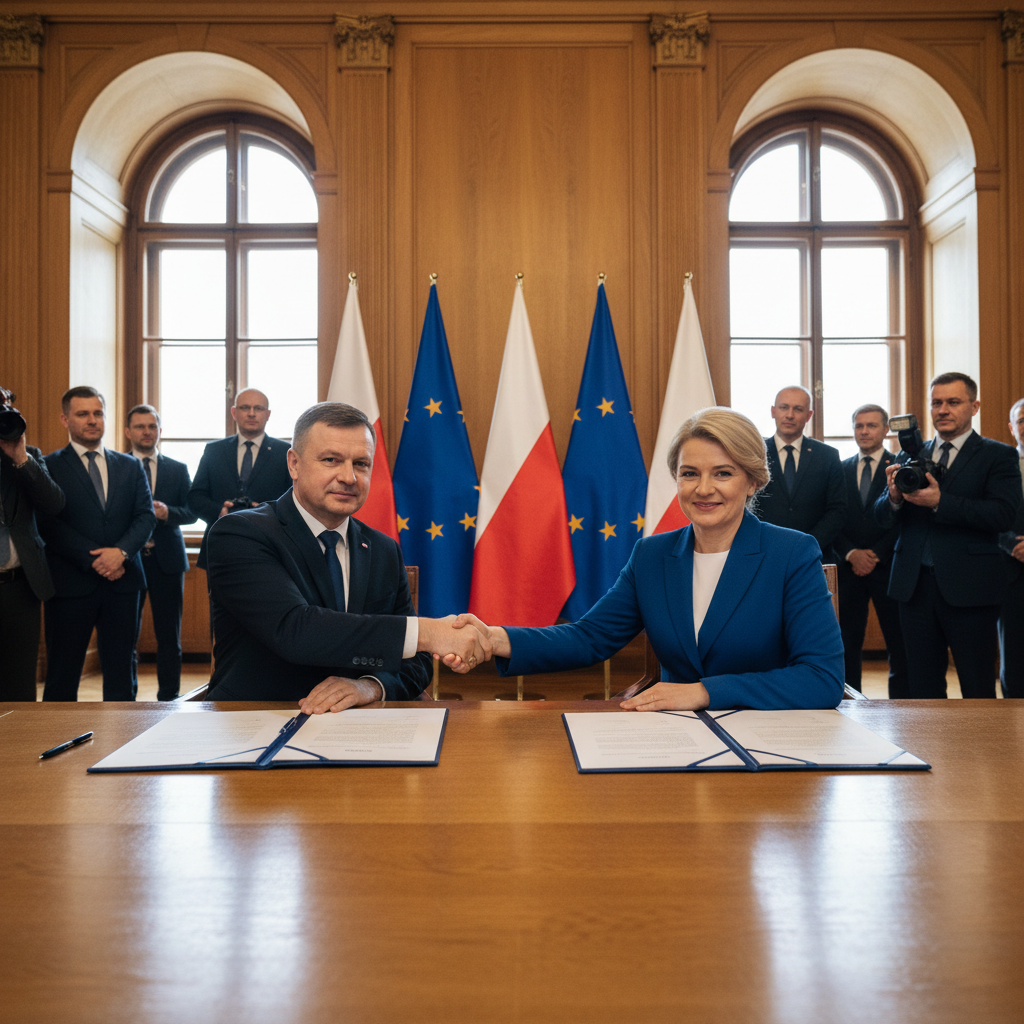
Article 50 for Defence: The EU Prepares to Trigger Its Mutual Defence Clause
The EU's diplomatic service is drawing up operational guidelines for Article 42(7) — the European mutual defence clause. In an era when Trump questions NATO, Brussels is preparing to use it.
Article 42(7) of the Treaty on European Union is not famous. Most Europeans have never heard of it. But it exists for precisely the moment the EU is now entering: when America's commitment to European defence becomes uncertain.
On April 3, 2026, the EU's diplomatic service began circulating a draft operational manual on how to trigger the clause. Not theoretical discussions. Not think-tank papers. A working manual.
What Article 42(7) Actually Does
The clause states that if an EU member state is subject to armed attack, all other member states have an obligation to render aid and assistance by all the means in their power. It is the European equivalent of NATO's Article 5 — and it exists entirely outside the North Atlantic framework.
For decades, Article 42(7) was treated as a dead letter. Why invoke European solidarity when you had American security guarantees? The question no longer needs answering.
Why Now
Trump's statements about NATO have been unambiguous. On multiple occasions this week alone, he has suggested that the US might not defend NATO allies — or might only do so if they meet arbitrary spending targets he has set. He has mocked European leaders. He has questioned the value of the alliance itself.
From Brussels' perspective, the response is obvious: stop assuming NATO will exist and start building the architecture for European defence that doesn't depend on it.
The manual being drafted will guide member states on the political, legal, and military steps required to invoke Article 42(7). It will clarify the role of the European Council, the military chain of command, and the relationship to NATO operations — if any.
The Immediate Trigger Question
No one at the Commission believes Article 42(7) will be invoked tomorrow. But the exercise of preparing for it serves a purpose: it forces member states to actually think through what European defence means without America.
France will be happy. France has wanted European strategic autonomy for decades. Poland, the Baltics, and Romania are more nervous — they have historically relied on the US as a counterweight to Russia and are less confident in European-only defence.
The manual will have to thread that needle: credible enough to deter; realistic enough to command support; ambitious enough to matter.
The Larger Signal
What the EU is doing this week is not subtle. By preparing operational manuals for its mutual defence clause, Brussels is telling Washington: we heard you. We are preparing to be on our own.
Whether that changes American behaviour — or simply accelerates Europe's decoupling from NATO — will be the defining geopolitical question of the next two years.
When an alliance starts preparing for its own death, the end is usually not far behind.
Study Tips & Discussion
(0)Log in to join the discussion.
No comments yet — be the first to share your thoughts!