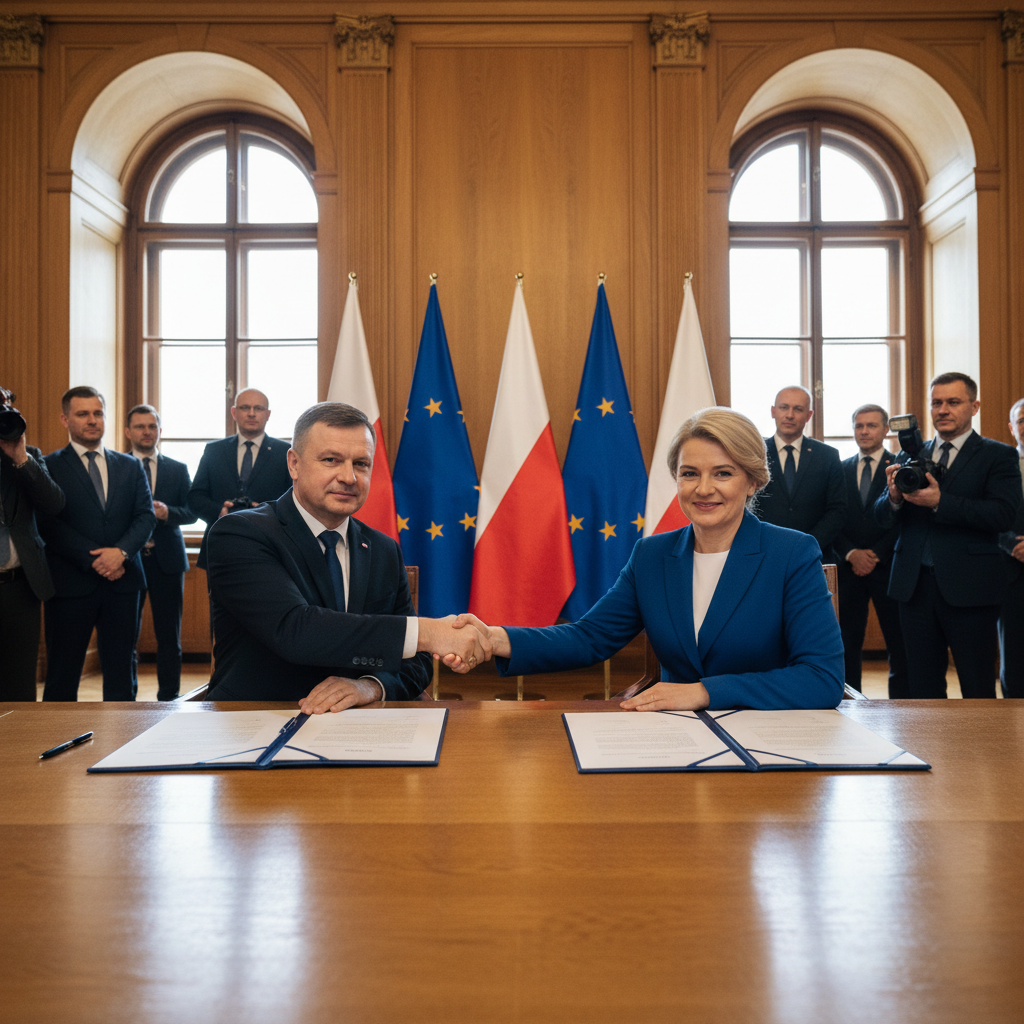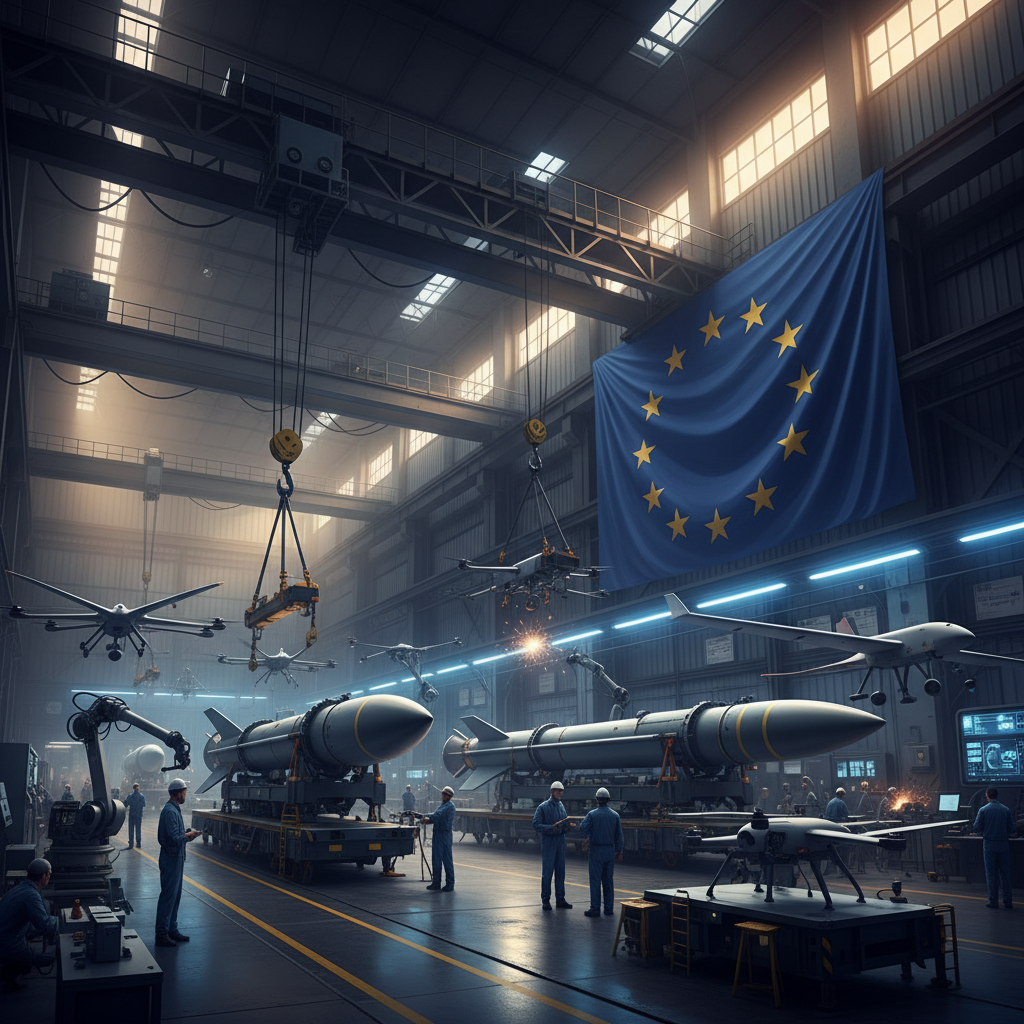
Europe's Defence Industrial Awakening: The Commission Deploys €1.5 Billion
The European Commission has launched its EDIP work programme — €1.5 billion in grants for 2026–2027 to scale up missile production, counter-drone systems, and Ukraine's own defence industrial base.
For decades, European defence funding meant national budgets, fragmented procurement, and duplicated capabilities. On 31 March 2026, the European Commission approved its first work programme under the European Defence Industry Programme (EDIP) — and the numbers mark a genuine break with the past.
€1.5 billion in grants, deployed across 2026 and 2027. First calls for proposals live today on the EU Funding and Tenders Portal. The message from Brussels is unambiguous: the era of defence as a national afterthought is over.
Where the Money Goes
The allocation is telling. More than €700 million is directed at boosting production of counter-drone systems, missiles, and ammunition — the three capability gaps that Ukraine's war has made impossible to ignore. Of that, €260 million flows directly through the Ukraine Support Instrument (USI) of EDIP, investing in collaborative projects that expand production capacity on both sides of the border.
A further €325 million funds European Defence Projects of Common Interest (EDPCI) — large-scale collaborative industrial projects open to Norway and Ukraine as well as EU member states. Joint procurement of counter-drone, air and missile defence, and ground and naval combat systems receives €240 million, with grants of up to €20 million per consortium of contracting authorities.
Perhaps the most strategically significant line item: €100 million in equity support for defence start-ups, SMEs, and small mid-caps through the FAST fund. An additional €35.3 million under the BraveTech EU initiative targets defence innovation for both Ukrainian armed forces and EU industry competitiveness.
Why This Is Different
Previous EU defence initiatives — from PESCO to the European Defence Fund — were criticised for being too small, too slow, and too deferential to member state sensitivities around sovereignty. EDIP is structured differently. It is explicitly designed to reduce industrial fragmentation, incentivise joint procurement, and build production scale across borders.
The inclusion of Ukraine's defence industrial base as a core beneficiary — not a recipient of charity, but a partner in a shared production ecosystem — is also new. Brussels is betting that integrating Ukrainian capacity now makes strategic sense: cheaper, faster, and politically durable regardless of how the war ends.
The Bigger Picture
EDIP does not exist in isolation. It sits alongside the ReArm Europe plan, the €150 billion SAFE loan instrument, and a Commission now formally committed to treating defence as an economic and industrial priority. The pace of change is striking: EDIP's enabling regulation was adopted in December 2025, and its first work programme is live three months later.
The question is no longer whether Europe will build a defence industrial base. It is which companies, which member states, and which supply chains will define it — and how quickly they can move.
The first calls are open. The race has started.
Study Tips & Discussion
(0)Log in to join the discussion.
No comments yet — be the first to share your thoughts!