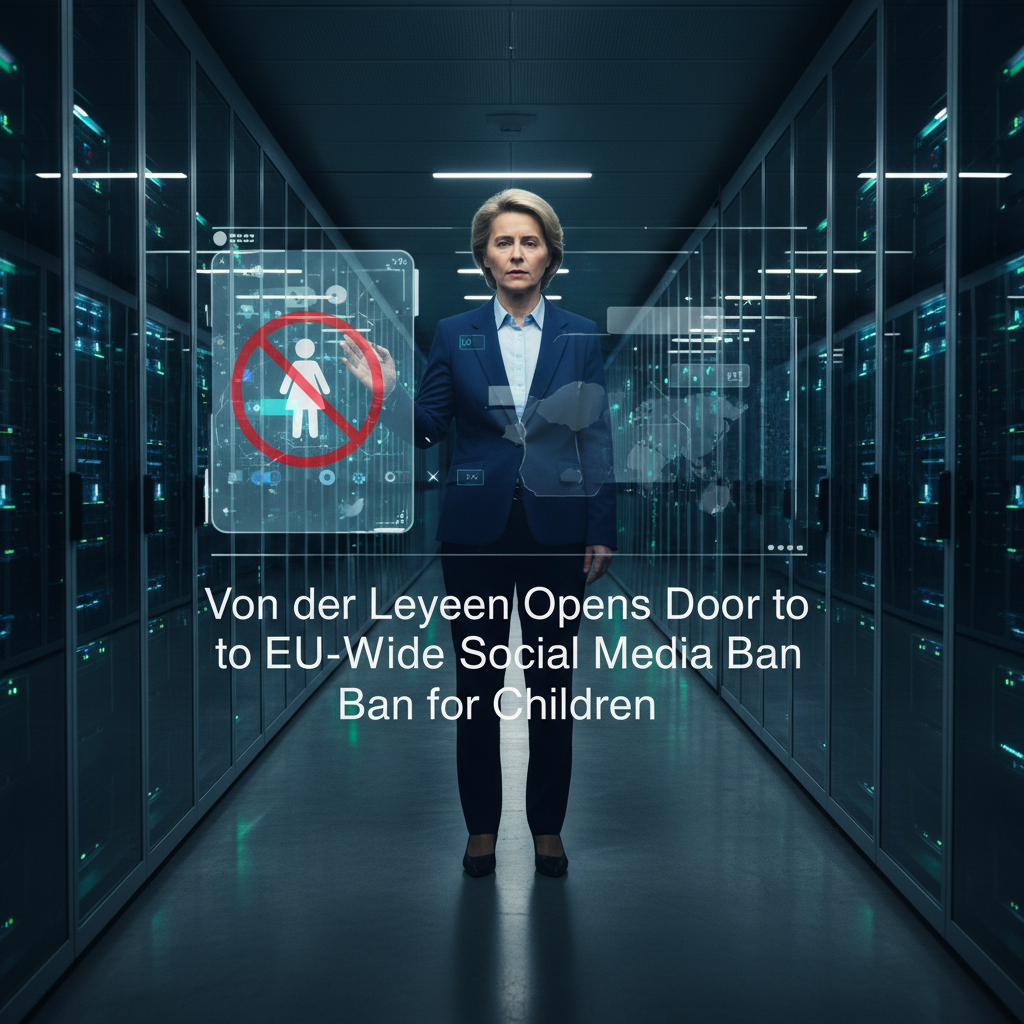
Brussels Freezes National Social Media Bans for a Year, and Austria Becomes the First Casualty
The Commission has imposed a twelve-month standstill on national laws restricting children's social media access, using the TRIS notification procedure to stop Austria's under-14 ban from taking effect until late July 2027. France and Greece escape the freeze because their review periods closed before the EU's KIDS Act was tabled on 17 September. Vienna is proceeding anyway, and calling the block unacceptable.
The European Commission has told member states to stop legislating on children's access to social media for twelve months, and Austria is the first government to be formally caught by the freeze.
Commission spokesperson Thomas Regnier announced the pause at the midday press briefing on 29 October. "The European problem requires a united European response," he said, arguing that divergent national age thresholds would fragment the single market and that platforms would be unable to comply with conflicting regimes.
How the freeze works
The mechanism is the Technical Regulation Information System, the EU procedure under which member states must notify draft technical rules affecting online services before adopting them. Brussels normally has three months to respond. Where the Commission is simultaneously preparing EU legislation on the same subject, it can extend the standstill period to twelve months.
Austria notified its draft law at the end of July. The bill amends the country's audiovisual media law and sets a minimum age of 14 for certain video-sharing platforms. Its three-month review window expired only after the Commission had tabled its own proposal, which allowed Brussels to extend the standstill. Vienna now cannot adopt the ban before late July 2027.
The Commission says it gave advance warning: Executive Vice-President Henna Virkkunen spoke to the Austrian government the day before the announcement.
What the KIDS Act would do
The Commission tabled the EU KIDS Act on 17 September. Its architecture is tiered by age. Children under 13 could not hold social media accounts at all. Those aged 13 and 14 would receive a "mini account" managed by a parent, with reduced features and a limit of one hour of use per day. From 15, teenagers could open their own accounts.
Platforms would be required to verify age using certified tools rather than a self-declared date of birth, which is the provision with the largest compliance cost and the most significant privacy implications. The proposal is now with the European Parliament and Council, and Regnier urged both institutions to accelerate negotiations.
Two countries escaped
The freeze is not universal, and the exemptions are the most politically awkward part of the announcement. France and Greece notified their restrictions earlier, and their review periods expired before the KIDS Act was tabled. Greece's parliament adopted a ban on social media access for under-15s on 23 October.
Regnier referred only to "legal judicial nuances" in the timing. The result is a market in which a Greek fifteen-year-old is barred from platforms that a fifteen-year-old in Vienna can use freely, which is precisely the fragmentation the Commission cited as its justification for the standstill.
Slovenia, Italy and Belgium have also notified drafts, according to the Commission, and would fall under the same twelve-month constraint.
Vienna's response
The Austrian government reacted with open frustration. Vice-Chancellor and Media Minister Andreas Babler said the law was intended to protect children from daily harm caused by social media companies, and that this "does not deserve a delay".
State Secretary for Digitalisation Alexander Pröll went further, telling the daily Heute that it was "not acceptable" for Brussels to block national legislation without presenting a completed European solution, and that no finished EU instrument exists yet in force.
Vienna intends to complete the national parliamentary process regardless, so that the ban can be applied the moment the EU deadline expires. That approach preserves the political commitment while accepting that no Austrian child will be protected by it during 2027's first half.
The interim enforcement question
Brussels argues children are not left unprotected. The Commission promises strict enforcement of the Digital Services Act in the interim, which already obliges the largest platforms to assess and mitigate systemic risks to minors, and it points to ongoing proceedings under that framework.
Whether DSA enforcement substitutes for a statutory age limit is the crux of the dispute. The DSA imposes risk-mitigation duties and can lead to fines of up to six percent of global turnover, but it does not set a minimum age, and its obligations are enforced through regulatory dialogue rather than by denying access.
The next twelve months will therefore test two propositions simultaneously: whether a standstill on national legislation is a legitimate use of single market powers, and whether the EU's existing rulebook can deliver child protection outcomes while the KIDS Act is negotiated.
Study Tips & Discussion
(0)Log in to join the discussion.
No comments yet — be the first to share your thoughts!
More in Tech & Regulation