Four Countries Told to Carry the Migrant Caseload, and Fifteen Warned They Are Next
The Commission's second Annual Migration Management Cycle names Greece, Cyprus, Italy and Spain as under migratory pressure and eligible for the Solidarity Pool, puts fifteen member states at risk, and lists six facing a significant situation that can seek deductions. The 2027 pool's size is not public. The Council decides.
The European Commission launched its second Annual Migration Management Cycle on 6 November, the mechanism under the Pact on Migration and Asylum that determines which member states are under pressure, which are at risk, and who pays into the solidarity pool for the year ahead.
The headline numbers are, by the Commission's account, good. Illegal border crossings have more than halved over the past two years, with a further drop of more than a third in the first six months of this year. Unauthorised movements between member states fell 22 per cent in 2025 and asylum applications fell 19 per cent. The EU-wide return rate has risen above 30 per cent.
The new Eurodac system is operational in all member states. A third of all registered asylum applications have been processed under accelerated or border procedures since the Pact took effect last June. Implementation of the first Solidarity Pool for 2026 is on track.
Who is under pressure
Four member states are assessed as under migratory pressure and therefore eligible to access the Solidarity Pool, subject to continuing to apply the responsibility rules.
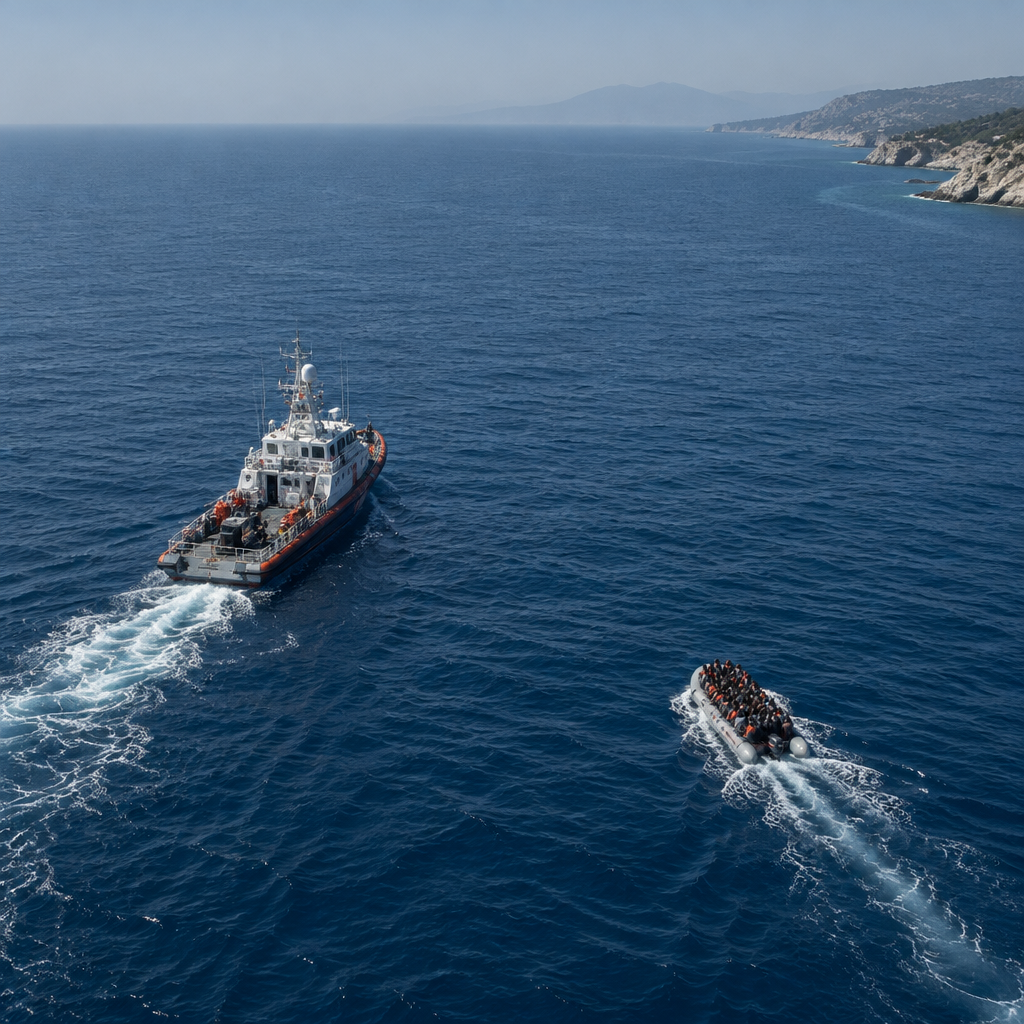
Greece and Cyprus, because of a disproportionate level of arrivals over the past year. Italy, because of a disproportionate number of arrivals following search and rescue at sea. Spain, because of the overall migratory situation and, explicitly, the incident in Ceuta.
The Commission adds a caveat on Italy: it has made progress in applying the responsibility rules, but more is needed and will be closely monitored. That is the language of conditionality, and it attaches to money.
The watchlist
Fifteen member states are judged to be at risk of migratory pressure: Belgium, Czechia, Germany, Estonia, Ireland, France, Croatia, Latvia, Lithuania, Luxembourg, the Netherlands, Poland, Romania, Slovenia and Finland.
The Commission gives several reasons, and they are not all about arrivals. Some face relatively high numbers of illegal entries or unauthorised secondary movements. Some face high asylum applications. Some carry the weight of temporary protection granted to people fleeing Russia's war in Ukraine. And some are flagged for the risk of weaponisation of migration, meaning a third country could deliberately push flows at them in the coming year.
Those fifteen get priority access to the Permanent EU Migration Support Toolbox and expedited reassessment if their situation changes.
The discount list
Six countries face what the Commission calls a significant migratory situation because of the cumulative effect of migration over the last five years: Bulgaria, Czechia, Estonia, Croatia, Austria and Poland.
They will be able to ask the Council for a full or partial deduction from their contributions to the Solidarity Pool for the coming year. That is the mechanism's political safety valve, and it is also where the solidarity argument will be fought, because a deduction for one state is a larger share for another.
The part that is not public
The Commission has proposed the size of the 2027 Solidarity Pool, but in line with the Pact's rules the proposal is not public. It is now for the Council to agree both the size and how each member state contributes, with flexibility to choose people solidarity through relocation or responsibility offsets, financial support, alternative measures, or a combination.
Once the Council adopts the decision, national contributions become public and legally binding.
That sequencing is the most consequential detail in the whole package. The Commission has published a detailed assessment and a distribution of who is under pressure, who is at risk and who can ask for a discount, while the actual number at stake remains behind closed doors until governments have settled it among themselves.
What to watch
The first test is whether the four states named on Friday accept the classification or contest it. Being named under pressure is a claim on solidarity money but also an admission about your border, and governments in election cycles read it both ways.
The second is the deduction requests from the six. If several are granted in full, the pool shrinks and the mechanism's first real year looks less like burden-sharing than a discount scheme.
The third is Italy's monitoring. The Commission has tied access to continued application of the responsibility rules, meaning the country with the largest sea arrivals is also the one whose compliance is under scrutiny. That combination, money and conditionality in the same sentence, is exactly what the Pact was designed to produce.
Sources
Study Tips & Discussion
(0)Log in to join the discussion.
No comments yet — be the first to share your thoughts!
More in EU Institutions
Related Articles

The EU Signs Off Its Last Normal Budget: €199.7 Billion, and a Defence Line of €3.1 Billion
7 min read

Tomorrow's EU Agenda: Dublin Summit Focuses on AI and Security — 13/11/2026
3 min read

Tomorrow's EU Agenda: Ukraine Security and Strategic Competitiveness — 12/11/2026
3 min read